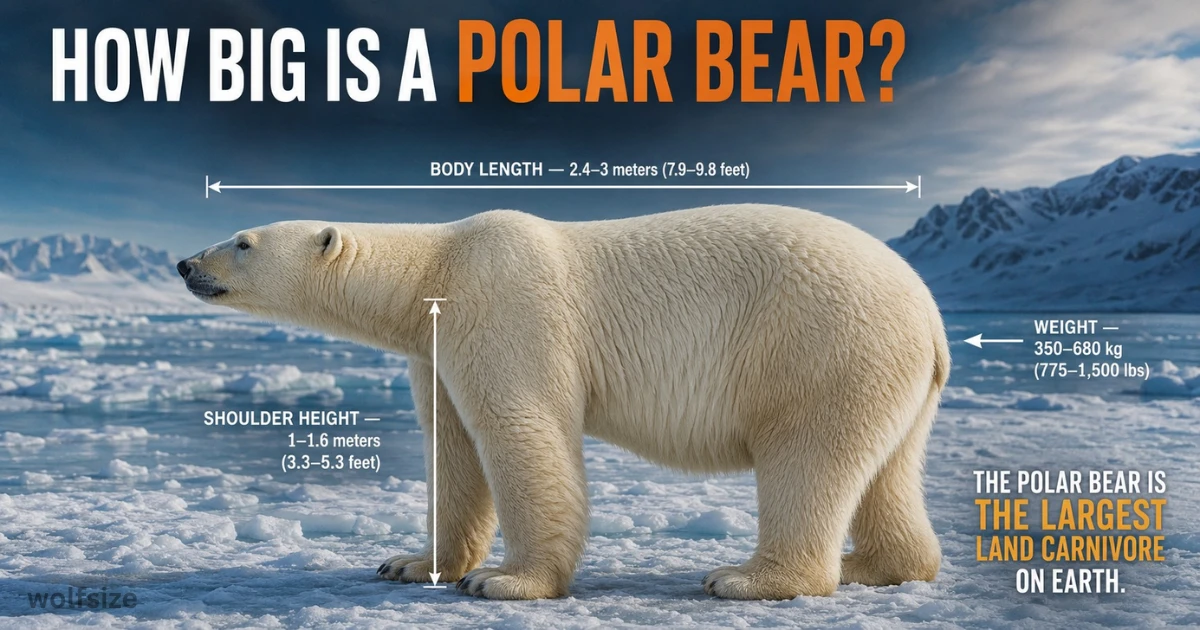
An adult male polar bear typically weighs
350–680 kg (775–1,500 lbs), stands
1–1.6 meters (3.3–5.3 feet) tall at the shoulder, and measures
2.4–3 meters (7.9–9.8 feet) in length from nose to tail.
The polar bear is the largest land carnivore on Earth, with large males capable of reaching more than 3 meters (10 feet) tall when standing on their hind legs.
An adult male can weigh as much as a small car and stand taller than a basketball hoop on his hind legs. That’s not an exaggeration — it’s biology.
In this guide, you’ll get real numbers for polar bear weight, polar bear height, and polar bear length, plus how they stack up against grizzlies, Kodiaks, and even you.
How Big Is a Polar Bear?
male-vs-female-polar-bear-size
Polar bears (Ursus maritimus) are the largest land carnivores on Earth. Size is their survival tool — a bigger body holds more fat, and fat is what keeps them alive through months without a meal.
Male Polar Bear Size (Weight & Height)
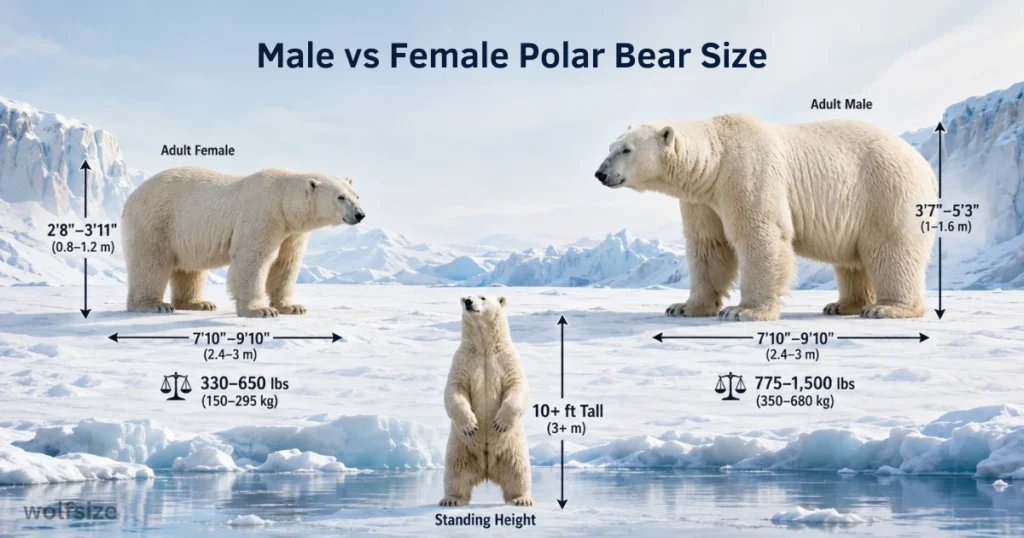
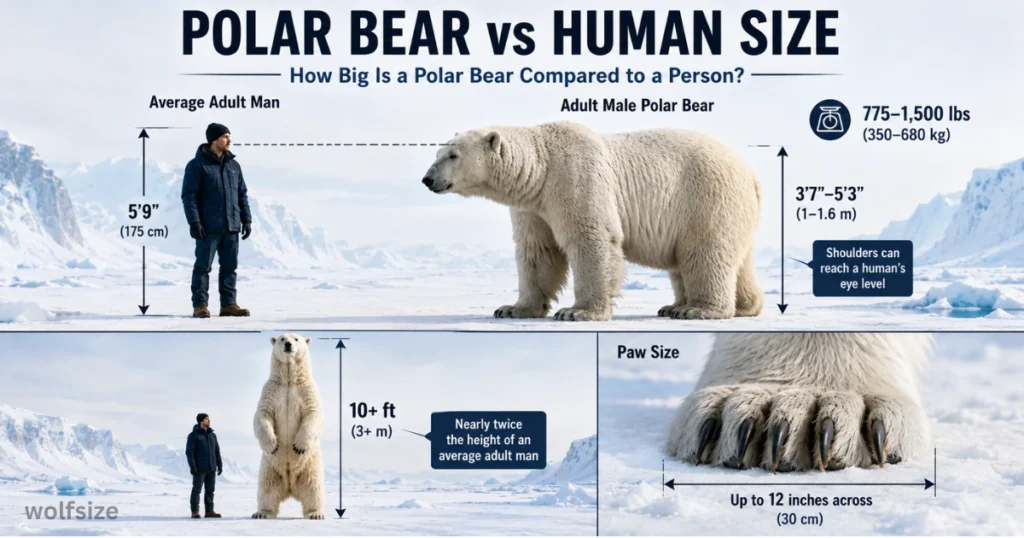
Adult males are the giants of the species. Most weigh between 775 and 1,500 pounds, with a shoulder height of 3’7″ to 5’3″. Males keep growing well into their teens, packing on muscle and blubber as they mature.
Female Polar Bear Size (Weight & Height)
Females run noticeably smaller. A typical adult female weighs 330 to 650 pounds, roughly half the size of a large male. Her shoulder height sits between 2’8″ and 3’11” — closer to a large dog than a bear twice her size.
Polar Bear Length (Nose to Tail)
From nose to tail, an adult polar bear stretches 7’10” to 9’10” (2.4–3 meters). That’s longer than a pool table. Males sit at the top end of that range; females tend to run shorter.
How Tall Is a Polar Bear Standing Up?
On their hind legs, large males can reach over 10 feet (3+ meters), though this isn’t their natural walking posture.
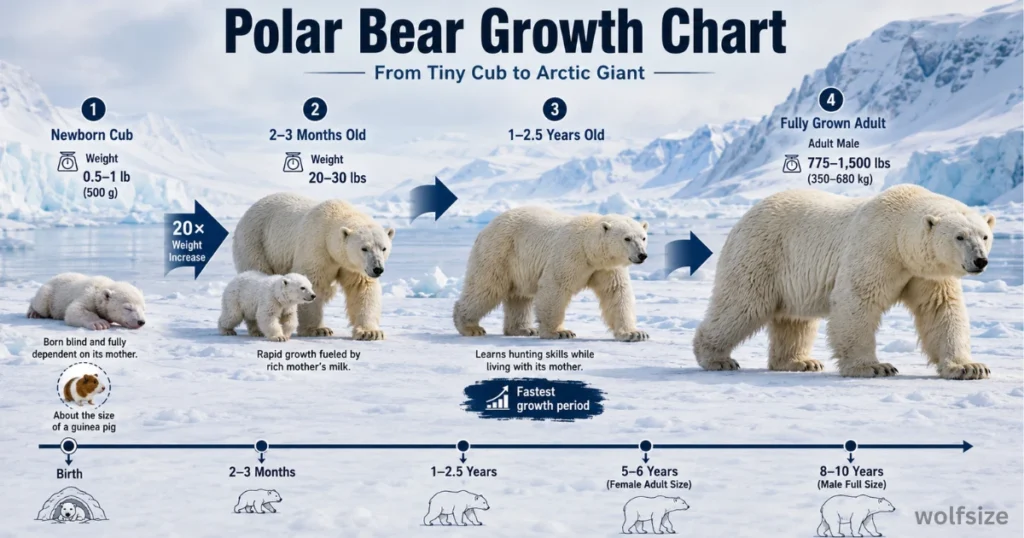
A newborn polar bear cub weighs about 500 grams to 1 pound — roughly the size of a guinea pig. Cubs are born blind, hairless in patches, and completely dependent on their mother’s body heat inside the den.
Cub Size at Den Emergence
By the time a mother leads her cubs out of the den in March or April, each cub has ballooned to about 20–30 pounds. That’s a 20-times weight increase in just two to three months, fueled by milk that runs about 31% fat — among the richest milk of any land mammal.
Sub-Adult Growth Stages
Cubs stay with their mother for roughly two and a half years, learning to hunt seals on sea ice. During this stretch, their weight climbs steadily but unevenly, with the biggest jumps happening once they start catching their own prey.
At What Age Do Polar Bears Reach Full Size?
Males typically hit full skeletal size around 8–10 years old, though they keep adding muscle mass afterward. Females mature faster, reaching adult size closer to 5–6 years old.
The largest polar bear ever documented was captured in Alaska in 1960. This male stood nearly 12 feet tall and weighed an astonishing 2,209 pounds — more than double the average adult male’s weight.
Why Do Some Polar Bears Grow Bigger Than Others?
Diet quality — bears with steady access to fat-rich seals grow larger than bears in food-scarce regions.
Sea ice availability — more ice means more hunting time, which means more calories.
Genetics — like humans, individual bears carry natural size variation.
Age — males don’t stop bulking up until well past their first decade.
Bears in regions with thick, stable ice — like parts of the Beaufort Sea — tend to run larger than bears forced onto land for extended periods.
Polar Bear Size Comparison
polar-bear-size-Comparison
Polar Bear vs. Kodiak Bear Size
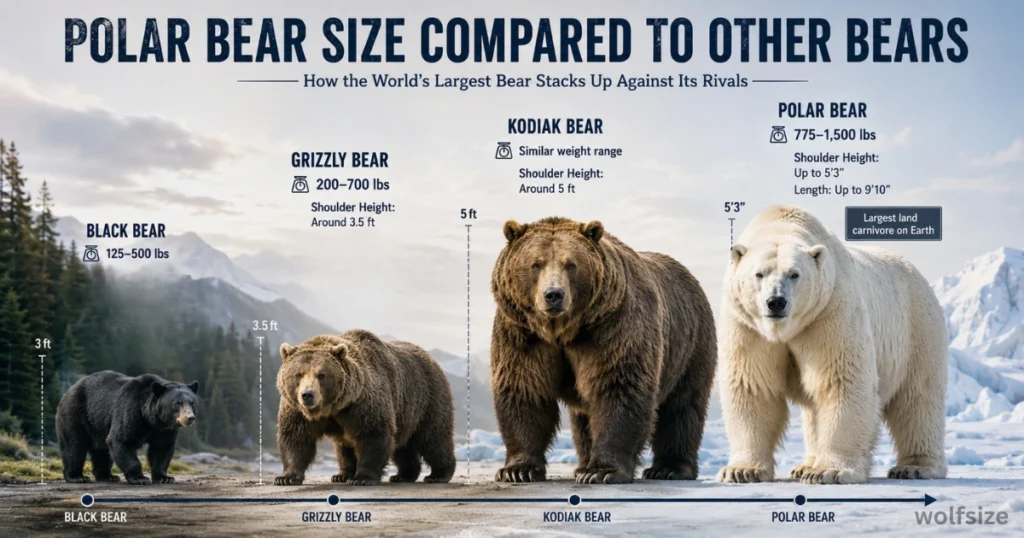
The Kodiak bear, a giant subspecies of brown bear from Alaska, is the polar bear’s closest size rival — so close that experts often call it a tie for the world’s largest bear.
Kodiaks reach a similar shoulder height (around 5 feet) and comparable weight, though the biggest polar bears edge out the biggest Kodiaks by roughly 300 pounds.
Polar Bear vs. Grizzly Bear Size(Is a polar bear bigger than a grizzly?)
Yes, by a wide margin. Grizzly bears stand only about 3.5 feet at the shoulder — nearly two feet shorter than a polar bear — and weigh 200 to 700 pounds, roughly half the weight of a large male polar bear.
Polar Bear vs. Black Bear Size
Black bears are the smallest of North America’s major bear species, typically weighing 125–500 pounds. A large male polar bear can outweigh a black bear by three to four times, making the size gap the most dramatic of any bear comparison.
Polar Bear vs. Human Size
polar-bear-size-Compare-human
Stand a polar bear next to an average adult man (about 5’9″), and the bear towers over him even on all fours — a male’s shoulder alone can reach eye level.
Reared up on hind legs, a polar bear is nearly twice the height of a grown man, with a paw the size of a dinner plate, measuring up to 12 inches across.
Roughly half of a polar bear’s body weight is fat. This blubber layer can grow up to 4.5 inches thick, insulating the bear against temperatures that regularly drop below -50°F. That same fat reserve powers pregnant females through up to eight months without eating while denning and nursing cubs.
Huge Paws and a Frame Built for Swimming & Ice
A polar bear’s paws can measure nearly a foot across, acting like built-in snowshoes that spread weight across thin ice. In water, the same paws work as paddles, helping bears swim steadily for hours at a time across open Arctic seas.
FAQs About Polar Bear Size
Can a polar bear be 10 feet tall?
Yes. Large adult males can stand over 10 feet tall on their hind legs, though they walk on all fours at a much shorter shoulder height.
How big is the biggest polar bear?
The largest ever recorded stood nearly 12 feet tall and weighed 2,209 pounds, captured in Alaska in 1960.
Is a polar bear bigger than a grizzly?
Yes. Polar bears are taller and roughly twice as heavy as grizzly bears on average.
Conclusion
Polar bear size isn’t just an impressive number — it’s a survival adaptation shaped by ice, cold, and scarcity.
From a 1-pound cub to a 1,500-pound adult male, every stage of growth serves one purpose: staying alive in the harshest environment on Earth. Whether you’re comparing them to grizzlies, Kodiaks, or yourself, one fact holds true — nothing on land quite matches the polar bear’s scale.
Robert Taylor is a content researcher and writer specializing in dimensions, measurements, and size comparison guides. He creates clear, practical content that helps readers understand real-world sizes and measurements with confidence. His work focuses on delivering accurate, easy-to-use dimension information in both U.S. and metric units.