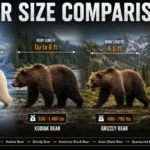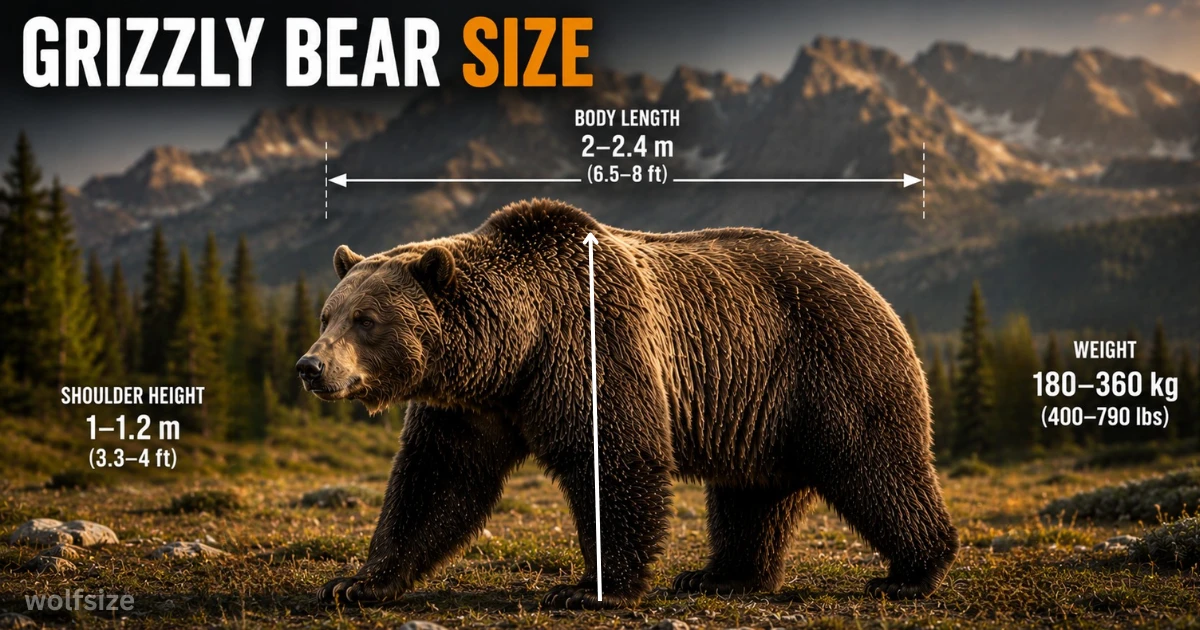
Grizzly bear size is among the largest of all bear species. An adult male grizzly bear typically stands about 3.3–4 feet (1–1.2 meters) tall at the shoulder, measures 6.5–8 feet (2–2.4 meters) in length, and weighs between 400–790 pounds (180–360 kg). Large individuals can exceed these measurements, making the grizzly bear one of North America’s most powerful land mammals.
A full-grown grizzly bear can weigh up to 860 pounds and stand nearly 8 feet tall on its hind legs. But grizzly bear size changes a lot depending on age, sex, diet, and where the bear lives.
This guide breaks down real numbers — weight, height, length, paw size, and how grizzlies stack up against black bears, Kodiak bears, polar bears, and even humans.
Grizzly Bear Size Overview
Average Grizzly Bear Weight (Male vs. Female)
Male grizzly bears typically weigh between 300 and 860 pounds (135 to 390 kg). Female grizzlies are noticeably smaller, weighing 200 to 450 pounds (95 to 205 kg).
Males can be nearly double the weight of females — a pattern called sexual dimorphism, common in large bear species.
Grizzly Bear Height at the Shoulder
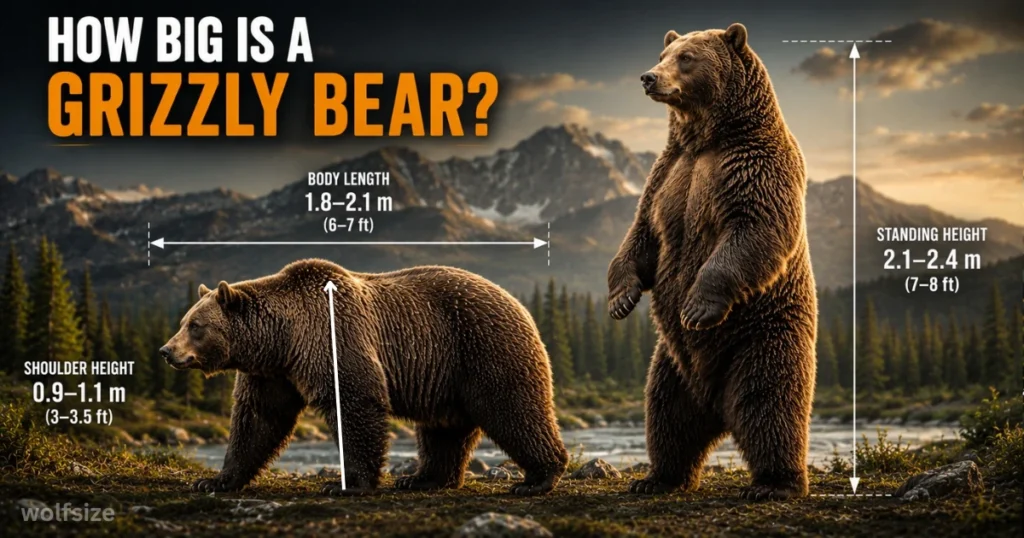
On all fours, a grizzly stands roughly 3 to 3.5 feet (90 to 110 cm) at the shoulder. That hump you see on a grizzly’s back isn’t fat — it’s solid muscle, built for digging and delivering powerful blows.
Grizzly Bear Body Length (Nose to Tail)
Most adult grizzlies measure 6 to 7 feet long from nose to tail. Standing fully upright on hind legs, a large male can reach 7 to 8 feet tall — tall enough to look into a second-story window.
Grizzly Bear Size by Region — Coastal vs. Interior
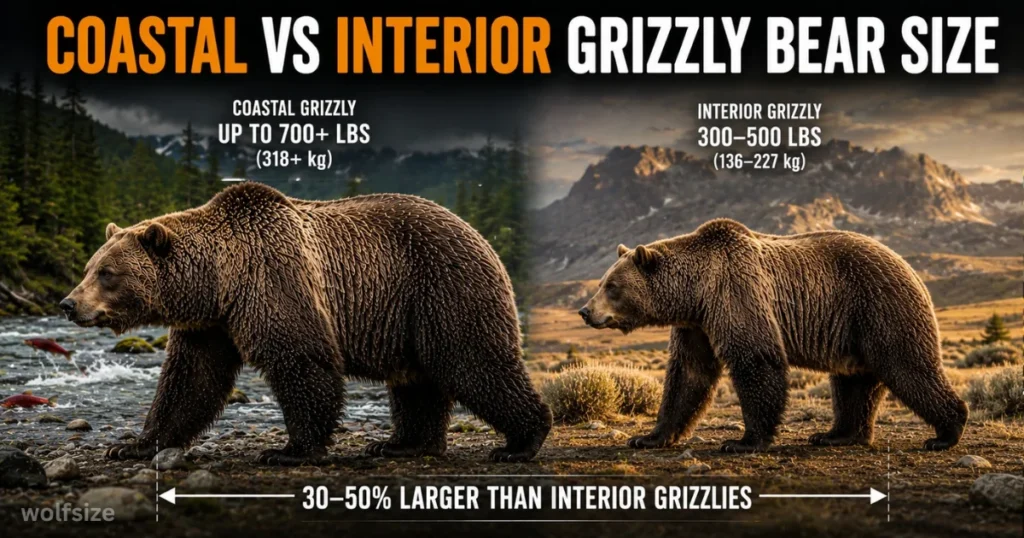
Coastal Grizzly Bear Size (Alaska & British Columbia)
Coastal grizzlies are the giants of the species. Bears living near Alaska’s rivers and British Columbia’s coast can weigh 30 to 50% more than their inland cousins. Some coastal males top 700 pounds.
Interior (Inland) Grizzly Bear Size
Interior grizzlies — the ones found in Yellowstone, Montana, and Wyoming — run smaller, usually 300 to 500 pounds for adult males. Food is harder to come by inland, so bears simply don’t pack on the same bulk.
Why Coastal Grizzlies Grow Larger (Salmon & Food Access)
The answer comes down to protein. Coastal bears feast on salmon runs every summer and fall, loading up on fat before winter denning. Interior bears rely more on roots, berries, and grasses — calorie-poor by comparison. More fish means more mass.
Grizzly Bear Size Compared to Other Bears
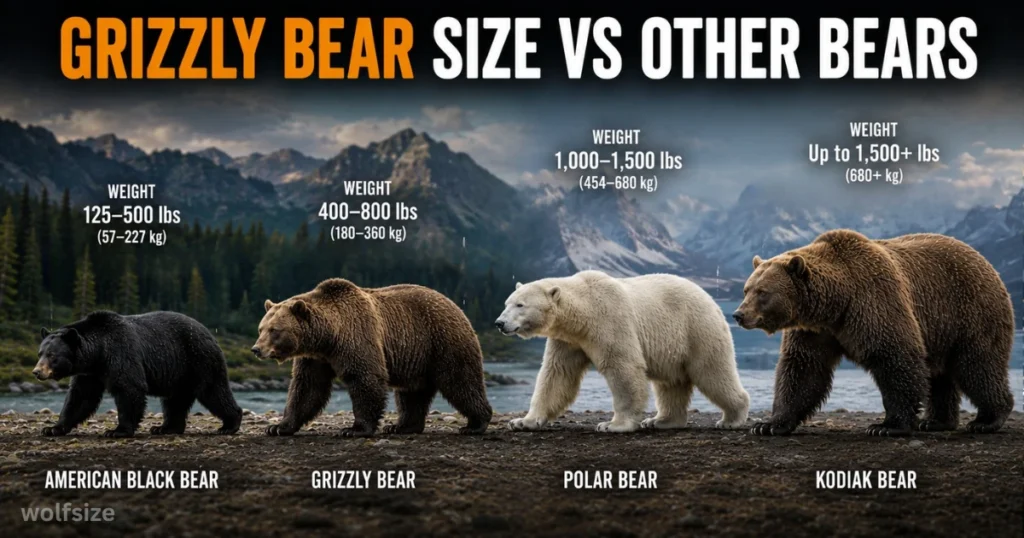
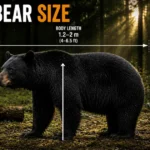
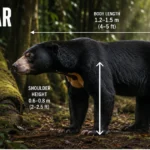
Grizzly Bear vs. Black Bear Size
Black bears are the lightweights here. An adult male black bear weighs 125 to 500 pounds, well under a grizzly’s top weight.
Grizzlies also carry a shoulder hump and longer front claws — two features black bears don’t have.
Grizzly Bear vs. Kodiak Bear Size
The Kodiak bear is technically a grizzly subspecies (Ursus arctos middendorffi), and it’s the largest brown bear on Earth.
Kodiak males can exceed 1,500 pounds during peak fattening season — nearly double a typical grizzly.
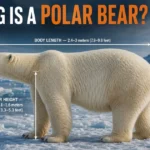
Polar bear vs Grizzly bear size
Polar bears win on raw size. A large male polar bear can hit 1,000 to 1,500 pounds and stand taller at the shoulder.
Grizzlies are stockier and more muscular; polar bears are longer-bodied and built for swimming.
Grizzly Bear vs. Human Size
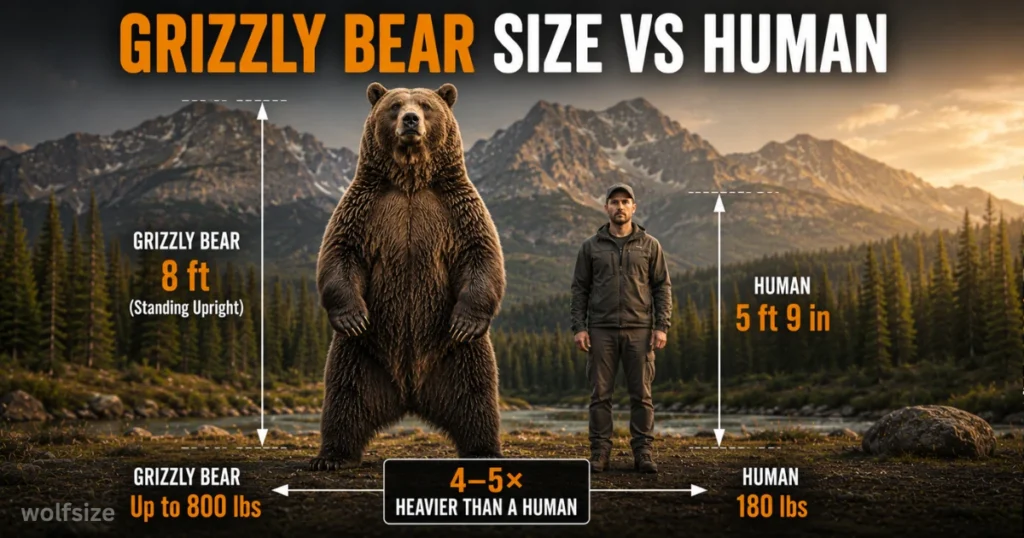
Compared to an average adult human — around 5’9″ and 180 pounds — a grizzly bear is roughly four to five times heavier and can stand nearly two feet taller when upright.
A single swipe from a grizzly’s paw generates enough force to break bone.
What Affects Grizzly Bear Size?
Grizzly Bear Growth Stages (Cub to Full-Grown Adult)
Newborn cubs weigh just around 1 pound — smaller than a loaf of bread. By their first birthday, cubs balloon to 50 to 100 pounds.
Males keep packing on size until roughly age 8 to 10, when they finally reach full adult mass.
Diet, Seasonal Weight Gain & Hibernation
Before winter denning, grizzlies enter a phase called hyperphagia — an intense feeding period where a bear can gain 3 pounds a day.
This fat reserve carries them through 5 to 7 months of hibernation with no food or water.
Grizzly Bear Paw, Claw & Track Size
Grizzly Bear Paw Print Size
A grizzly’s front paw print measures about 7 inches wide, with the hind paw stretching close to 12 inches long — roughly the size of a human forearm.
Grizzly Bear Claw Length
Grizzly front claws run 2 to 4 inches long, built for digging roots and tearing into logs. Black bear claws, by contrast, rarely exceed 1.5 inches.
How to Identify Grizzly Tracks by Size (vs. Black Bear Tracks)
Grizzly tracks show long claw marks well ahead of the toes, and the toe pads sit in a fairly straight line. Black bear tracks have shorter, curved claws set closer to the toes, with the toe line arching more.
FAQ’s About Grizzly Bear Size
How much does a full-grown grizzly bear weigh?
A full-grown male grizzly weighs 300 to 860 pounds; females weigh 200 to 450 pounds.
How tall is a grizzly bear standing up?
Standing on hind legs, a large grizzly reaches 7 to 8 feet tall.
What is the biggest grizzly bear ever recorded?
The largest confirmed grizzly-type bear weighed over 1,700 pounds — a Kodiak subspecies individual.
Are Kodiak bears bigger than grizzly bears?
Yes. Kodiak bears are a grizzly subspecies but grow nearly twice as large due to abundant salmon.
How big is a grizzly bear compared to a human?
A grizzly is about 4 to 5 times heavier than an average human and can stand almost 2 feet taller.
Conclusion
Grizzly bear size isn’t one fixed number — it shifts with sex, region, diet, and age. A coastal male gorging on salmon can weigh three times more than a lean interior female.
What stays constant is the raw power: even a “small” grizzly dwarfs a human and out-muscles nearly every other land animal in North America. Understanding these size ranges isn’t just trivia — it’s exactly what hikers, hunters, and wildlife watchers need to correctly identify and safely respect this animal in the wild.

Robert Taylor is a content researcher and writer specializing in dimensions, measurements, and size comparison guides. He creates clear, practical content that helps readers understand real-world sizes and measurements with confidence. His work focuses on delivering accurate, easy-to-use dimension information in both U.S. and metric units.