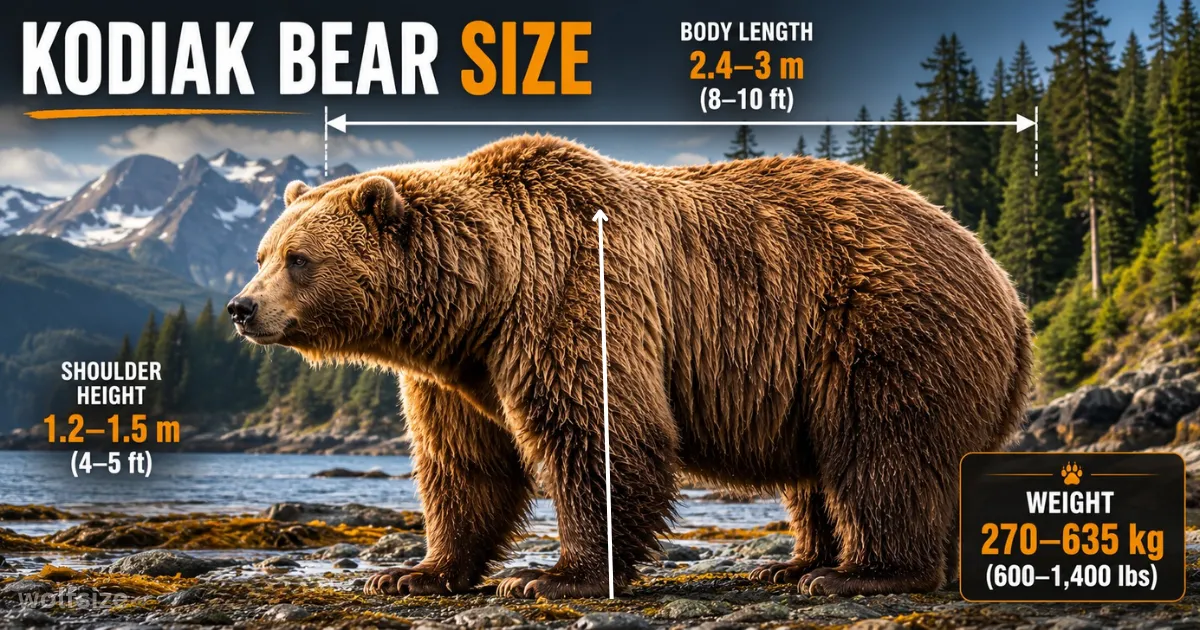
Kodiak bear size is among the largest of all bear species. An adult male Kodiak bear typically weighs between 600–1,400 pounds (270–635 kg), stands about 4–5 feet (1.2–1.5 meters) tall at the shoulder, and measures 8–10 feet (2.4–3 meters) in length. Large males can exceed 1,500 pounds (680 kg), making the Kodiak bear one of the biggest land carnivores on Earth.
This guide breaks down exactly how big Kodiak bears get, why they grow so massive, and how their size stacks up against grizzlies, polar bears, and black bears. Every fact here comes from wildlife research and field data, not guesswork.
Kodiak Bear Size Overview (Quick Facts)
Before going deeper, here’s the fast answer to how big is a Kodiak bear:
- Weight: Males up to 1,500 lbs; females 400–700 lbs
- Shoulder height: 4–5 feet (males)
- Standing height: Over 10 feet on hind legs
- Body length: 6.5–9 feet, nose to tail
- Lifespan: 20–25 years in the wild, up to 35 in captivity
Kodiak bears are a subspecies of brown bear (Ursus arctos middendorffi) found only on Alaska’s Kodiak Archipelago. They share the title of world’s largest bear with the polar bear.
More Posts:Largest Bear Ever: Arctotherium Angustidens, the Biggest Bear in History
Kodiak Bear Weight and Height
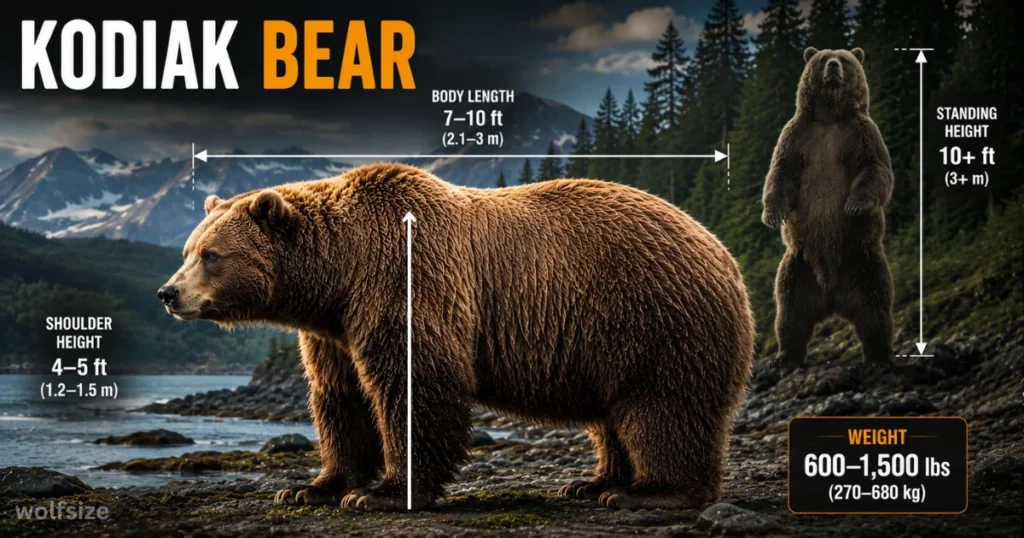
Male Kodiak Bear Size (Weight & Shoulder Height)
Adult male Kodiak bears, called boars, are the heavyweights of the species. A full-grown boar typically weighs 600 to 1,500 pounds and stands 4 to 5 feet tall at the shoulder on all fours.
That shoulder height alone is roughly chest-level to an average adult human. Boars keep growing in mass until around age six, when they reach their full adult size.
Female Kodiak Bear Size (Weight & Shoulder Height)
Female Kodiak bears, known as sows, are noticeably smaller. Sows weigh 400 to 700 pounds on average and stand 3.5 to 4 feet at the shoulder.
In general, sows run about 20% shorter and 30% lighter than boars. This size gap is common across most brown bear populations, not just Kodiaks.
Kodiak Bear Standing Height (On Hind Legs)
The most dramatic number in Kodiak bear size is standing height. When a large male rears up on his hind legs, he can reach over 10 feet tall — taller than the ceiling in most homes.
They stand to get a better view, catch a scent, or size up a possible threat. It’s a survey position, not an aggressive one.
More Posts:Grizzly Bear Size: How Big Do Grizzly Bears Really Get?
What Makes Kodiak Bears So Big?
Diet and the Salmon Runs
Kodiak Island sits on some of the richest salmon runs in Alaska. From spring through fall, bears gorge on fat- and protein-rich salmon, packing on weight before winter denning.
Bears are selective eaters too. They target the brains, eggs, and flesh of salmon first, since these parts carry the most calories per bite. This efficient feeding strategy fuels rapid weight gain.
Island Isolation and Genetics
Kodiak bears have been genetically isolated from mainland grizzlies for roughly 12,000 years. Cut off on the archipelago, this population developed its own distinct traits — including a larger average body size than mainland brown bears.
Isolation limits genetic mixing, which lets size-related traits become more fixed in the population over time.
Lack of Predators and Competition
Kodiak Island has no wolves or other large predators competing with bears for food. Without that pressure, bears can spend more energy on foraging and growth instead of defending territory or avoiding rivals.
This is also why Kodiak bears tolerate close company at salmon streams — something rare among most solitary bear species.
Kodiak Bear Size Compared to Other Bears
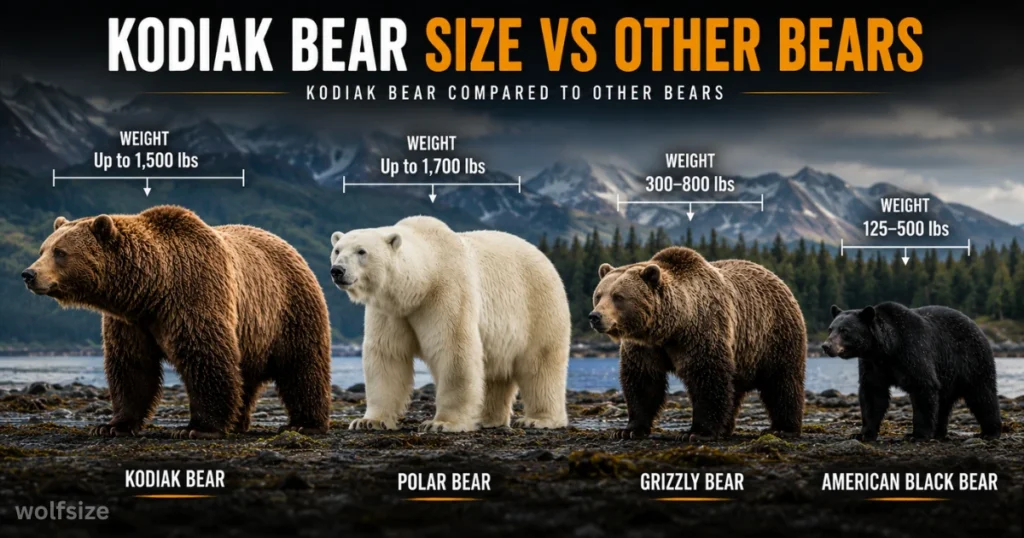
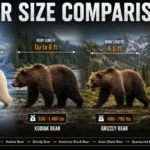
Kodiak Bear vs Grizzly Bear Size
Kodiak bears are larger than grizzly bears on average, despite looking similar. A grizzly typically weighs 300–800 pounds, well under a Kodiak boar’s top weight of 1,500 pounds.
The two subspecies also don’t share territory. Their ranges never overlap, which is part of why Kodiaks evolved into a separate, bigger subspecies.
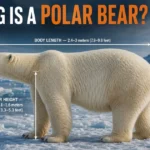
Kodiak Bear vs Polar Bear Size
Kodiak bears and polar bears are the two largest bears on the planet, and their size overlaps closely. Kodiaks tend to have a slightly higher average weight, while polar bears often stand a bit taller and longer due to their elongated build for swimming.
Diet also splits them apart. Polar bears hunt seals and marine mammals, while Kodiak bears rely on salmon, plants, and berries.
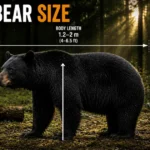
Kodiak Bear vs Black Bear Size
Black bears average just 125–500 pounds — a fraction of a Kodiak bear’s weight. A Kodiak boar can outweigh a large black bear three to one.
Black bears are also shorter, with a shoulder height of roughly 2 to 3 feet compared to a Kodiak’s 4 to 5 feet.
More Posts:Sun Bear Size: How Big Is the World’s Smallest Bear?
Kodiak Bear vs Human Size
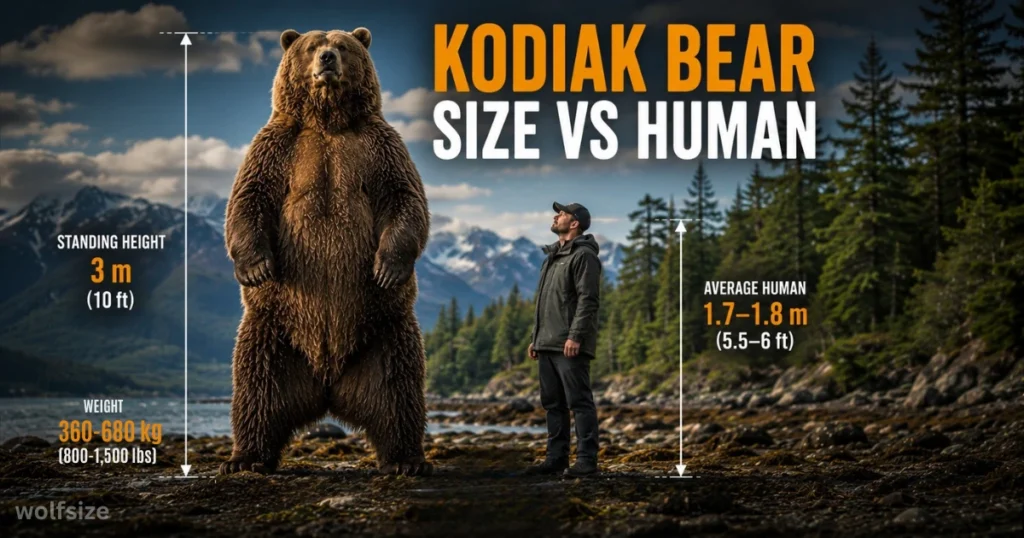
To put Kodiak and polar bear size into perspective: an average adult human stands around 5.5 to 6 feet tall and weighs 150 to 200 pounds.
A standing polar bear or Kodiak bear can be nearly double a person’s height and seven to ten times heavier. That scale difference is exactly why wildlife experts urge extreme caution around either species in the wild.
FAQs About Kodiak Bear Size
Is a Kodiak Bear Bigger Than a Grizzly?
Yes, Kodiak bears are bigger than grizzly bears. A Kodiak boar can weigh up to 1,500 pounds, compared to a grizzly’s typical top weight of around 800 pounds.
What’s the Biggest Kodiak Bear Ever Recorded?
The largest verified Kodiak bear skull on record measured over 30 inches, the biggest ever documented in North America. Since wild bears are rarely weighed directly, skull size — not scale weight — is the standard measure experts use for record bears.
Is a Kodiak Bear Aggressive?
No, Kodiak bears are generally not aggressive toward humans. Only one fatal attack has been recorded on Kodiak Island in the past 75 years, and bears there typically avoid people whenever possible.
Conclusion
Kodiak bear size isn’t just impressive — it’s a direct result of rich salmon runs, thousands of years of island isolation, and zero competition from other large predators. A full-grown male can weigh as much as 1,500 pounds and stand over 10 feet tall, making Kodiak bears one of only two bear species that claim the title of world’s largest land carnivore.

Robert Taylor is a content researcher and writer specializing in dimensions, measurements, and size comparison guides. He creates clear, practical content that helps readers understand real-world sizes and measurements with confidence. His work focuses on delivering accurate, easy-to-use dimension information in both U.S. and metric units.