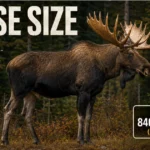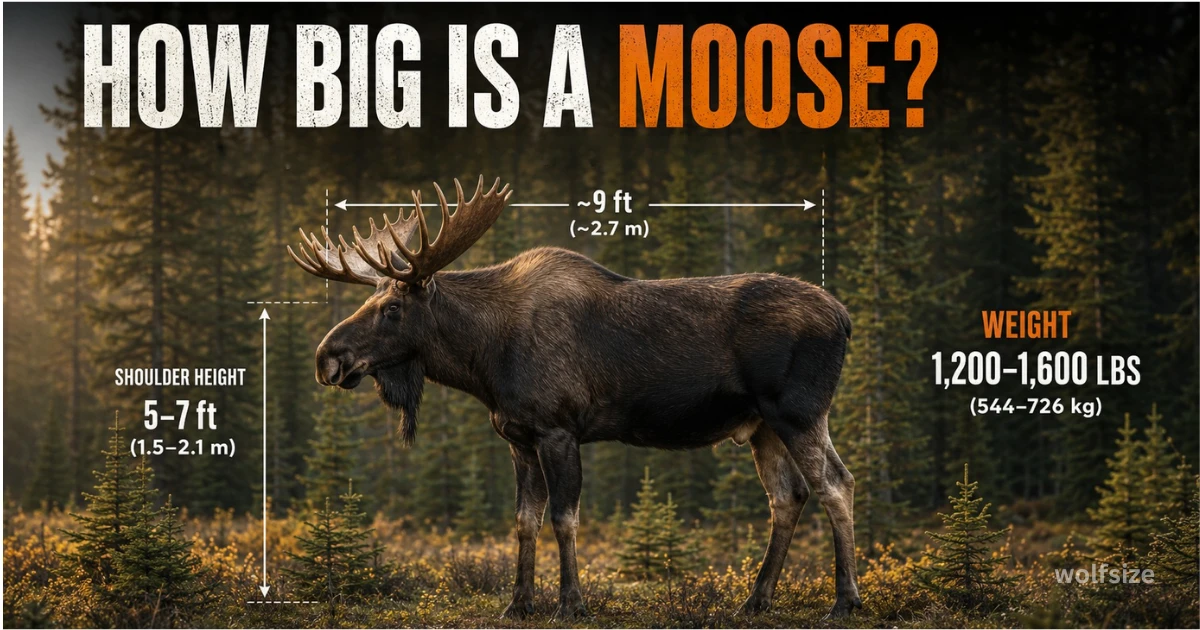
An adult bull moose typically weighs 1,200–1,600 pounds, stands 5–7 feet tall at the shoulder, and measures about 9 feet long. Large Alaskan bulls can reach 1,800 pounds and stand around 7 feet at the shoulder, second-biggest land mammal in North America, right behind the bison.
Moose size isn’t one fixed number, though. It changes by sex, age, and subspecies. Below, we break down exact moose weight, moose height, and antler size, backed by wildlife agency data — no guesswork, no filler.
Moose Size at a Glance
Average Moose Weight
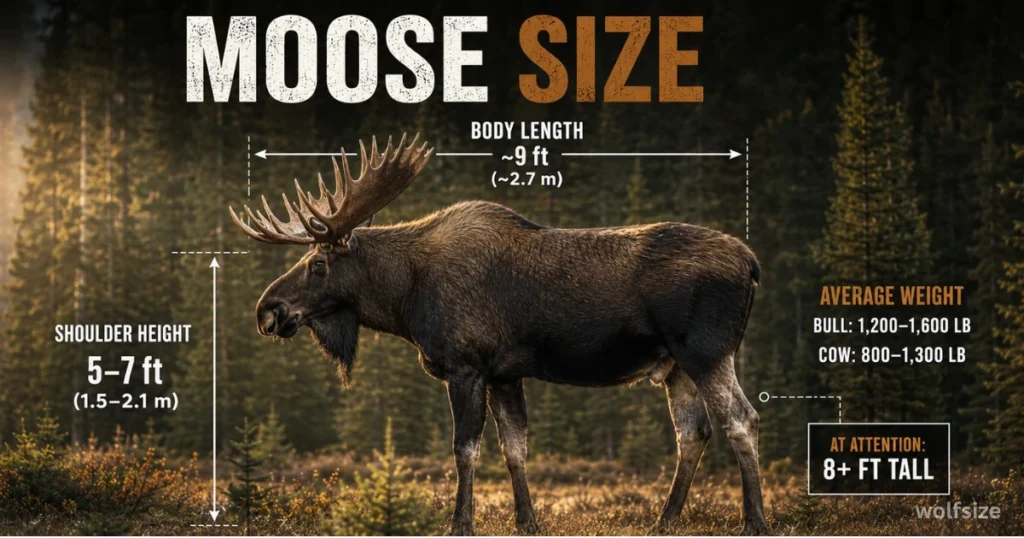
Adult bull moose weigh between 1,200 and 1,600 pounds, according to the Alaska Department of Fish and Game. Cow moose are lighter, ranging from 800 to 1,300 pounds. Maine’s Department of Inland Fisheries and Wildlife reports that a prime adult bull there averages 1,106 pounds, while mature cows average 836 pounds.
Average Moose Height
Moose stand 5 to 7 feet tall at the shoulder, depending on subspecies and sex. Add the head and neck, and a moose “at attention” can tower well past 8 feet. For comparison, an average horse stands just over 5 feet at the withers.
Moose Body Length
From nose to tail, a moose measures roughly 9 feet long. That’s longer than most pickup truck beds. Combined with their height and bulk, this is what gives moose their massive, almost prehistoric presence in the wild.
Moose Size by Subspecies
Alaskan Moose Size
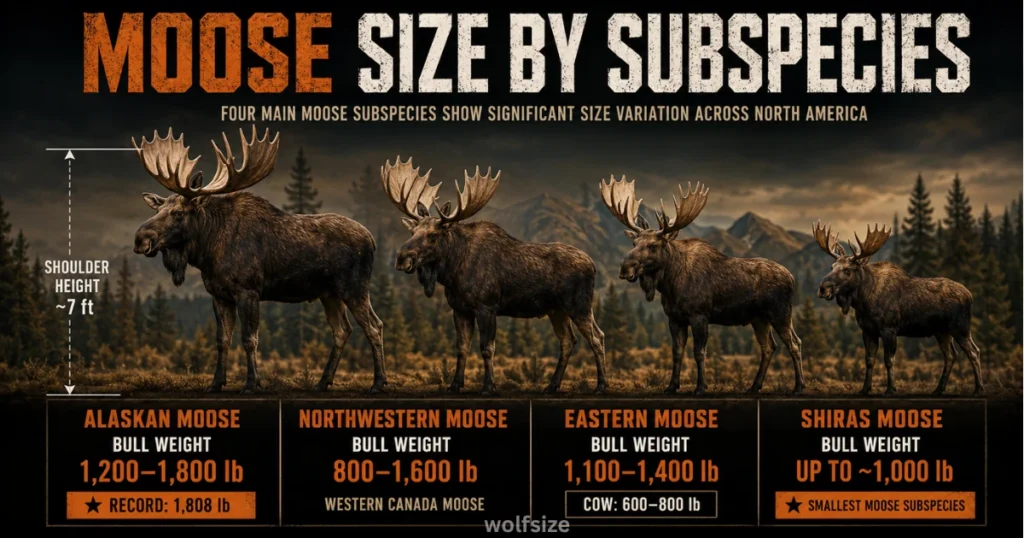
The Alaskan moose is the biggest subspecies on Earth. Bulls weigh 1,200 to 1,800 pounds and stand close to 7 feet at the shoulder. The heaviest Alaskan moose ever recorded weighed 1,808 pounds.
Northwestern Moose Size
Also called the Western Canada moose, this subspecies ranges from northwestern Canada down into northern Wisconsin and Michigan. Bulls weigh 800 to 1,600 pounds, with plenty of size variation across their range.
Eastern Moose Size
Found across eastern Canada and New England, bull Eastern moose typically weigh 1,100 to 1,400 pounds. Cows are noticeably smaller, usually 600 to 800 pounds.
Shiras Moose Size
The Shiras moose is the smallest subspecies, living in the Rocky Mountains from southern Canada down to Utah and Colorado. Bulls top out around 1,000 pounds — still massive, but modest compared to their Alaskan cousins.
More Posts:Short-Faced Bear Size: How Big Was the Giant Ice Age Bear?
Bull vs Cow Moose Size
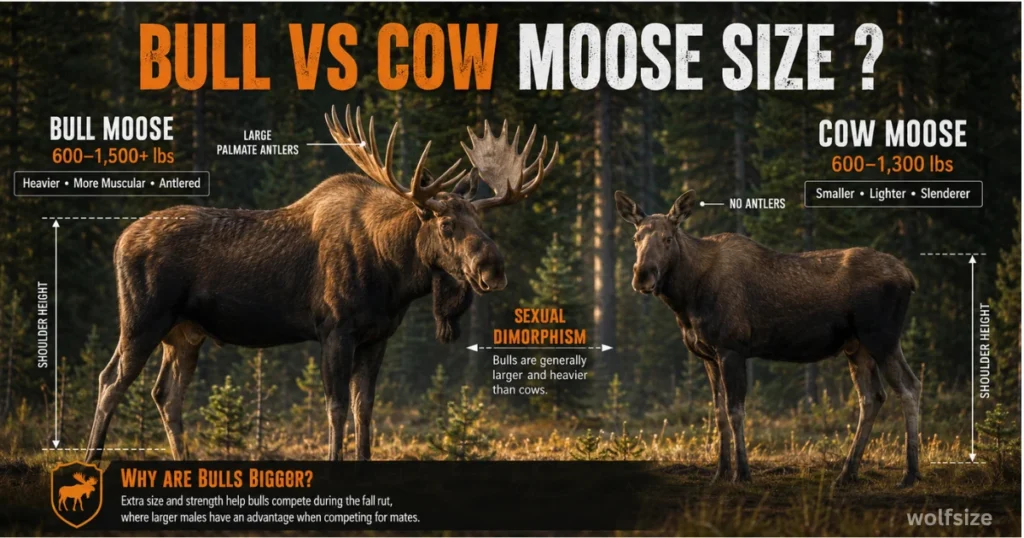
Sex is one of the biggest factors in moose size.
How Big Is a Bull Moose
A mature bull moose carries far more muscle mass and body weight than a cow. Bulls also grow large, palmate antlers each year, which adds visual bulk and can make them look even bigger than their actual weight suggests.
How Big Is a Cow Moose
Cow moose weigh less across every subspecies, generally landing between 600 and 1,300 pounds. Cows never grow antlers — a trait that’s almost unheard of in cows, according to Maine wildlife biologists.
Why Bulls Are Bigger Than Cows
Bulls need extra size and strength to compete during the fall rutting season. Larger bulls win more fights over mates, so evolution has favored bigger body size in males. This pattern, known as sexual dimorphism, shows up across most deer species.
Moose Size Compared to Other Animals
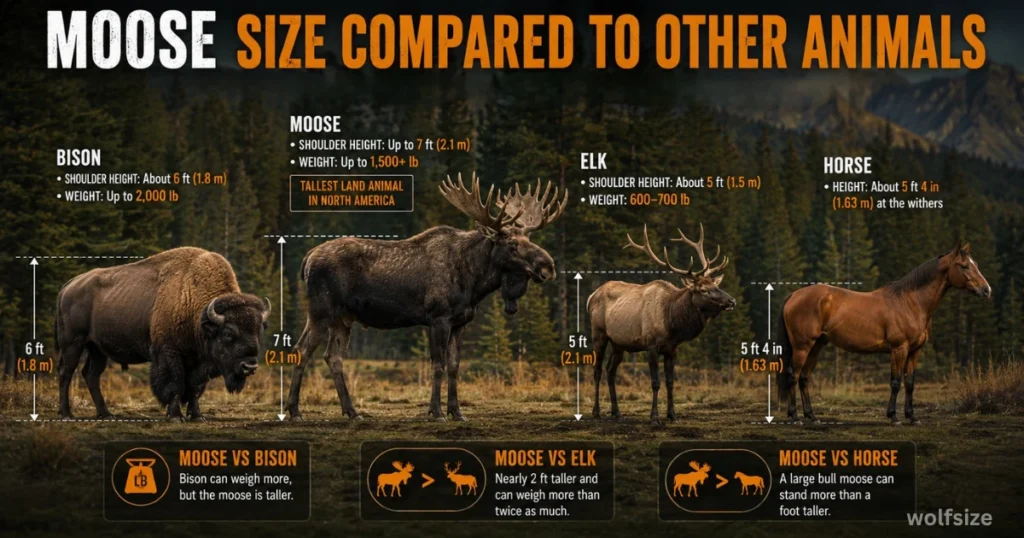
Moose vs Elk
A bull elk stands about 5 feet at the shoulder and weighs 600 to 700 pounds. A large Alaskan moose is nearly 2 feet taller and can outweigh a bull elk by more than double.
Moose vs Horse
An average thoroughbred horse stands 5 feet 4 inches at the withers. A big bull moose stands a foot or more taller — tall enough that most horses would look small standing next to one.
Moose vs Bison
Bison actually win on raw weight, reaching up to 2,000 pounds. But moose are taller. Bison stand around 6 feet at the shoulder, while a big bull moose can reach 7 feet — making the moose the tallest land animal in North America.
Moose vs Human
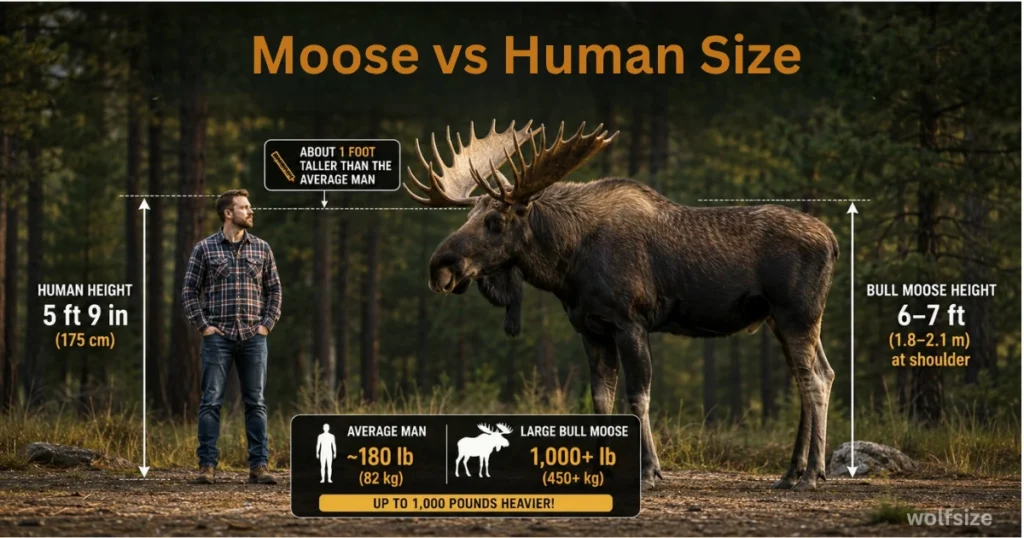
The average American man stands 5 feet 9 inches tall. A large bull moose can be a full foot taller than that, and it can outweigh an average adult by 1,000 pounds or more.
More Posts:Tiger Size vs Lion: Weight, Height, Length & Size Comparison
Moose Antler Size
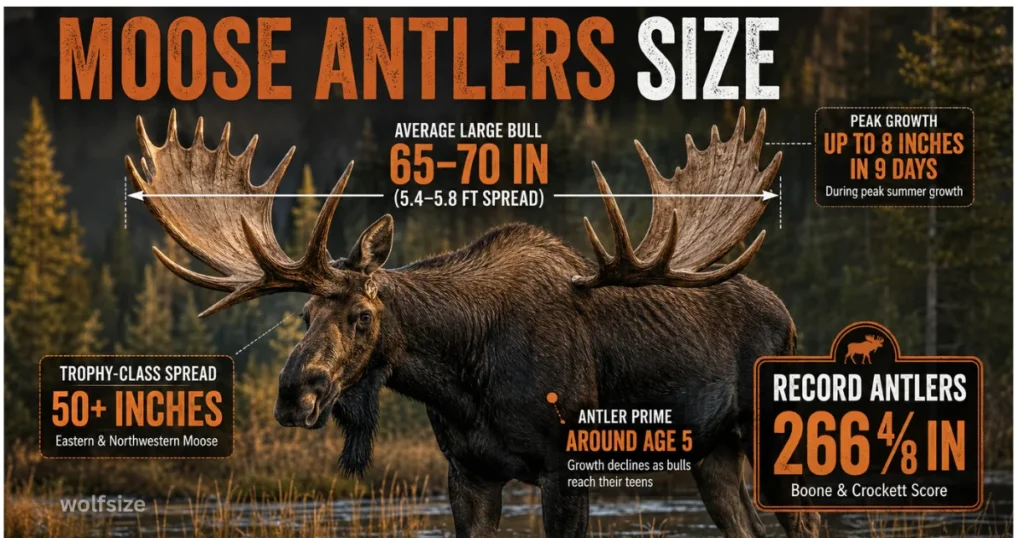
Antlers are the most recognizable feature tied to moose size, and they grow fast.
Average Antler Spread
A large Alaskan bull can carry an antler spread of 65 to 70 inches — nearly 6 feet across. Eastern and Northwestern bulls with a 50-inch spread are considered trophy-class.
Record Antlers
The largest verified moose antlers scored 266 4/8 inches using the Boone and Crockett scoring system, taken from a bull shot along Alaska’s lower Yukon River in 2010.
Antler Size and Age
Antlers grow fastest in bulls around age 5, then decline once bulls reach their teens. Moose antlers are among the fastest-growing tissue in the animal kingdom — capable of adding up to 8 inches in just nine days during peak summer growth.
More Posts:Himalayan Wolf Size: How Big Is This Rare High-Altitude Wolf?
Moose Size FAQs
How big is the biggest moose ever recorded?
The largest moose on record was an Alaskan bull weighing 1,808 pounds and standing 7 feet 8 inches tall at the shoulder.
How much does an average moose weigh?
Most adult moose weigh between 800 and 1,600 pounds, with bulls on the heavier end and cows on the lighter end.
How tall is a moose compared to a human?
A moose stands 1 to 2 feet taller than the average adult human at the shoulder alone — even taller once you count the head and antlers.
Are moose bigger than elk?
Yes. Moose are taller and heavier than elk in almost every comparison, often outweighing a bull elk by 500 pounds or more.
Do female moose have antlers?
No. Cow moose almost never grow antlers. Antlers are a trait found only in bull moose.
What is the smallest moose subspecies?
The Shiras moose is the smallest subspecies, with bulls typically weighing under 1,000 pounds.

Robert Taylor is a content researcher and writer specializing in dimensions, measurements, and size comparison guides. He creates clear, practical content that helps readers understand real-world sizes and measurements with confidence. His work focuses on delivering accurate, easy-to-use dimension information in both U.S. and metric units.