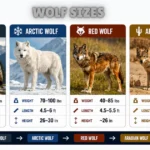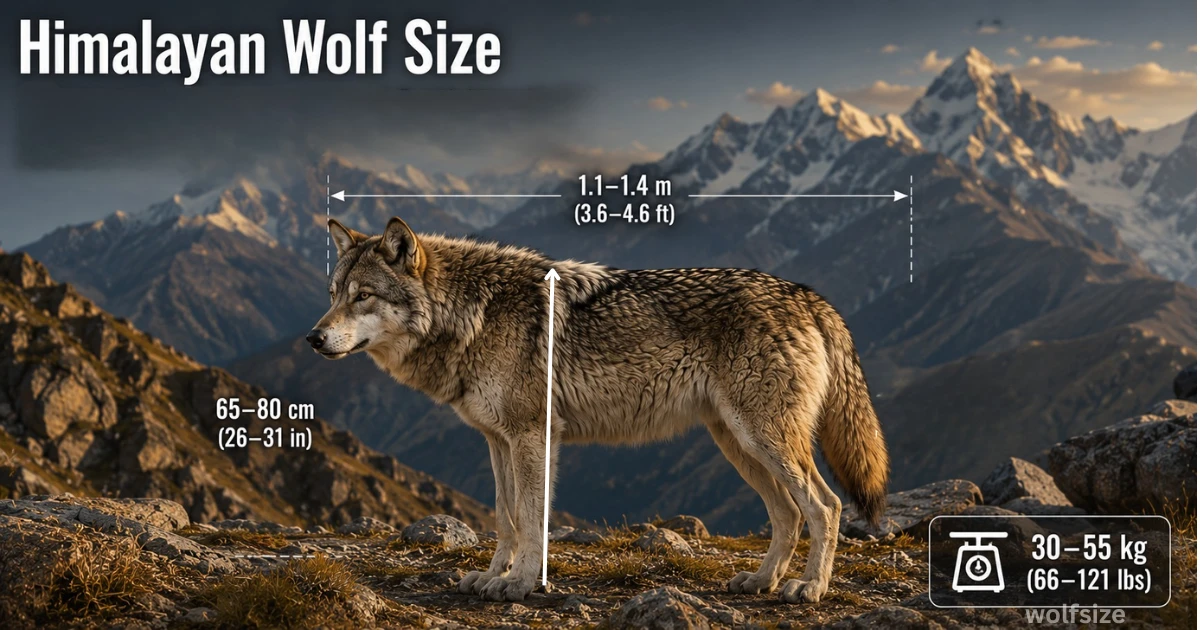
The Himalayan wolf is a mid-to-large sized wolf that typically weighs between 30–55 kg (66–121 lbs) and stands about 65–80 cm (26–31 inches) tall at the shoulder. Males are generally larger and heavier than females, giving this high-altitude predator a strong build for life in the rugged Himalayan region.
Below, we break down the full Himalayan wolf size picture — from exact measurements to how it stacks up against gray wolves, dogs, and even its own pups.
Himalayan Wolf Size at a Glance
Average Himalayan Wolf Height and Length
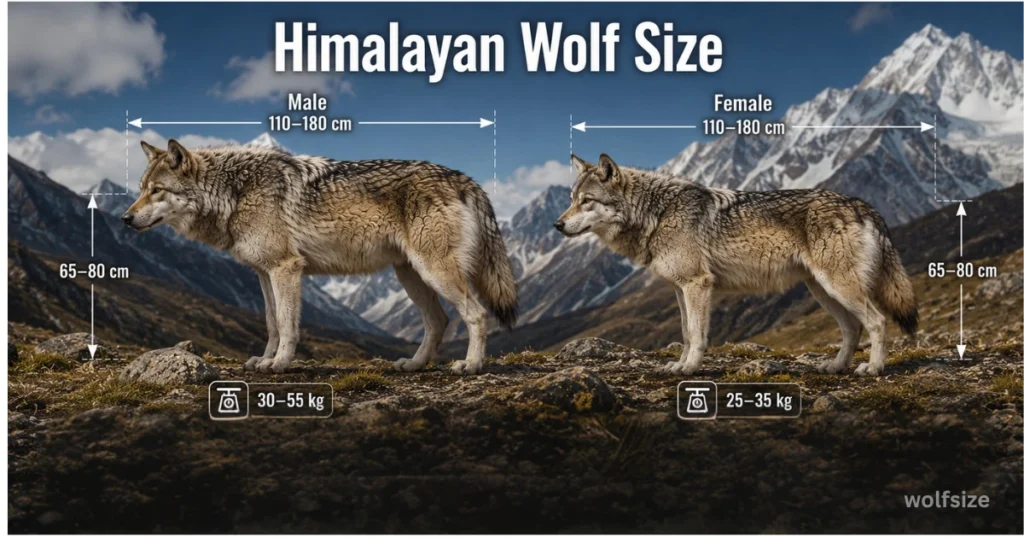
An adult Himalayan wolf measures roughly 110 to 180 cm from nose to tail tip, with a shoulder height of 65 to 80 cm. That’s taller at the shoulder than most domestic dogs but with a noticeably leaner, rangier frame.
Average Himalayan Wolf Weight (Male vs Female)
Males average 30 to 55 kg, while females run about 10 to 15% lighter, typically in the 25 to 35 kg range. This weight gap is common across most gray wolf lineages and reflects the male’s larger role in territorial defense.
More Posts:Southern Rocky Mountain Wolf Size: How Big Was This Extinct Gray Wolf?
Himalayan Wolf Size Compared to Other Wolves and Familiar Animals
Himalayan Wolf Size vs Gray Wolf
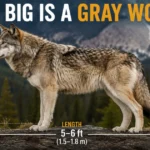
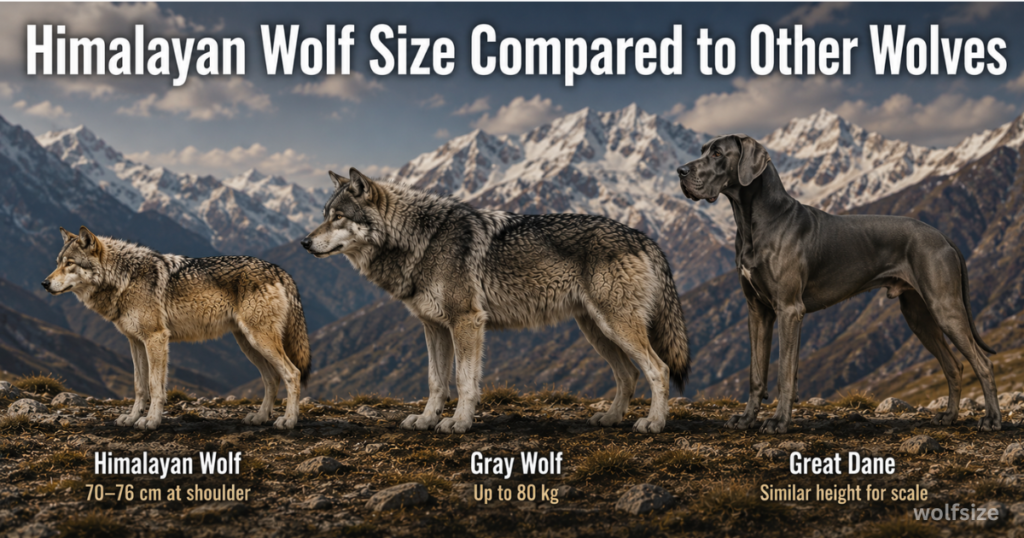
The Himalayan wolf is generally smaller and leaner than the Holarctic gray wolf found in North America and Europe, which can weigh up to 80 kg. Its body plan trades bulk for endurance, favoring a lighter frame suited to long treks across thin, high-altitude air.
Himalayan Wolf Size vs Tibetan Wolf
The Tibetan wolf and Himalayan wolf are so genetically close that researchers often treat them as the same lineage. Their size ranges overlap almost completely, with both averaging around 70 to 76 cm at the shoulder.
Himalayan Wolf Size vs a Large Dog Breed (for Scale)
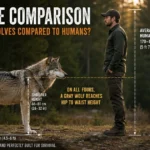
For a US reader, picture a Great Dane’s height paired with a Siberian Husky’s lean build. That combination roughly captures the Himalayan wolf’s silhouette — tall at the shoulder, but far leaner through the body than a heavyset dog breed.
Why the Himalayan Wolf’s Size Is Built for High Altitude
Genetic Adaptations Behind Its Body Size
The Himalayan wolf carries a distinct variant of the RYR2 gene, which supports cardiac function in low-oxygen conditions. Researchers have also identified EPAS1-related adaptations similar to those found in Tibetan human populations, pointing to a shared evolutionary pressure from hypoxia, or oxygen scarcity.
How Body Size Helps It Survive Low-Oxygen, Cold Environments
A leaner frame means less tissue demanding oxygen, which matters at elevations above 4,000 meters. The compact, muscular build also conserves body heat while still allowing the long-distance stamina needed to track scattered prey like blue sheep and Tibetan gazelle across vast, sparse terrain.
More Posts:Greenland Wolf Size: How Big Is This Rare Arctic Predator?
Himalayan Wolf Size by Age: From Pup to Adult
Himalayan Wolf Pup Size at Birth
Himalayan wolf litters typically number 4 to 6 pups. Newborns are blind, mostly helpless, and weigh only a small fraction of adult weight, staying inside the den for their first several weeks.
Juvenile Growth Stages
Pups grow rapidly through their first year, gaining both height and weight as they transition from milk to regurgitated meat brought back by adult pack members. By late autumn of their first year, juveniles already resemble smaller, leggier versions of the adults.
When the Himalayan Wolf Reaches Full Adult Size
Full adult size and sexual maturity arrive around two years of age. At this point, young wolves typically disperse from their birth pack to find their own territory and mate, a pattern consistent across most gray wolf lineages.
FAQs About Himalayan Wolf Size
How big is a Himalayan wolf compared to a gray wolf?
It’s generally smaller and leaner than the Holarctic gray wolf, though similar in shoulder height.
What is the average weight of a Himalayan wolf?
Adults average 30 to 55 kg, with males heavier than females.
Are Himalayan wolves bigger or smaller than domestic dogs?
Taller at the shoulder than most dog breeds, but leaner than heavy-bodied breeds like mastiffs.
How tall does a Himalayan wolf get at the shoulder?
Between 65 and 80 cm at the shoulder — about 26 to 31 inches.
Do male and female Himalayan wolves differ in size?
Yes. Males run 10 to 15% heavier than females, a common pattern in wolf species.
Conclusion
The Himalayan wolf’s size tells a survival story as much as a physical one. Its lean, tall frame, hypoxia-adapted genetics, and steady growth from pup to adult all point to one thing: an animal precisely built for life above 4,000 meters, where every gram of body weight has to earn its place.

Robert Taylor is a content researcher and writer specializing in dimensions, measurements, and size comparison guides. He creates clear, practical content that helps readers understand real-world sizes and measurements with confidence. His work focuses on delivering accurate, easy-to-use dimension information in both U.S. and metric units.