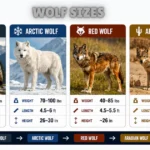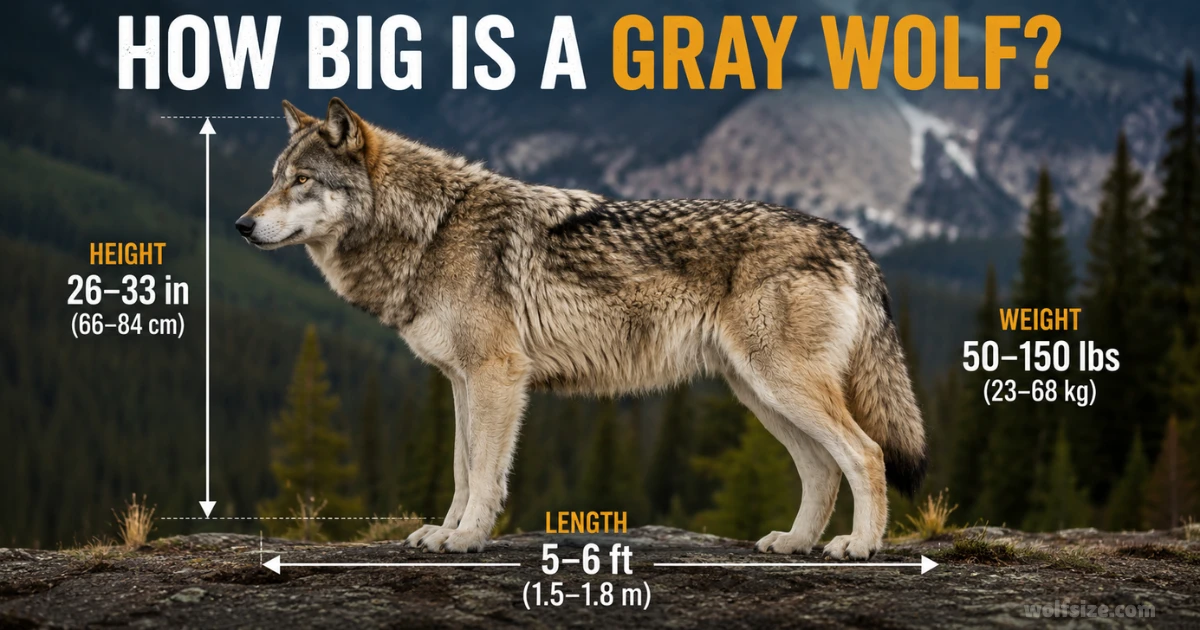
A fully grown gray wolf measures 1.5–1.8 m (5–6 ft) in length, stands 66–84 cm (26–33 in) tall at the shoulder, and weighs 23–68 kg (50–150 lbs).
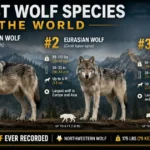
Northern populations, especially those in Alaska and Canada, are typically the largest. This makes the gray wolf the largest wild member of the dog family (Canidae).
This guide covers everything about gray wolf size: exact measurements, male vs female differences, subspecies variation, real-world comparisons, and the biology behind why this apex predator grows as large as it does.
Gray Wolf Size
Body Length
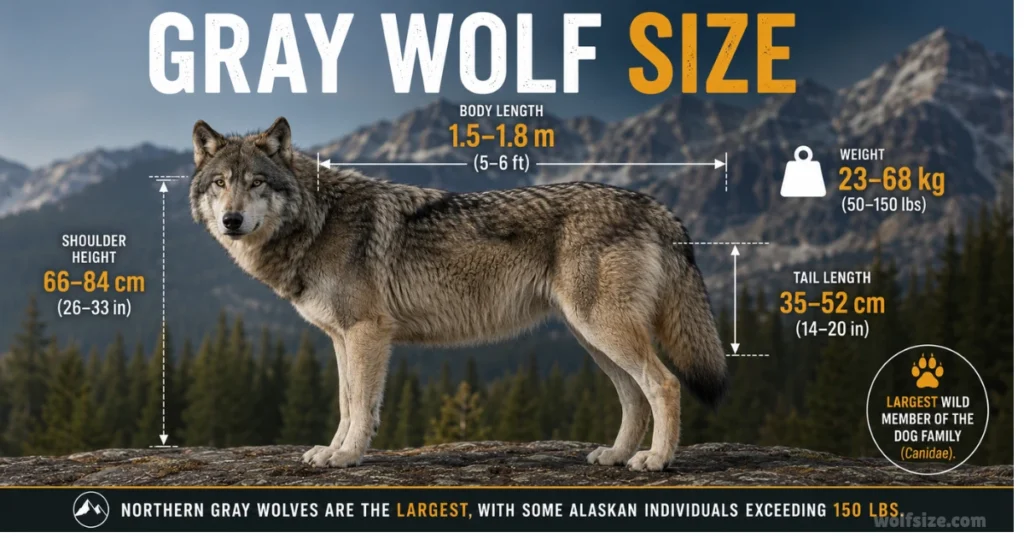
A gray wolf’s body length runs from 1.5 to 1.8 meters — measured from nose tip to tail base. That is roughly the length of a standard dining table.
Wolves in northern regions like Alaska and Canada sit at the upper end of that range. Wolves in southern areas like Mexico and the Middle East are noticeably shorter.
Shoulder Height
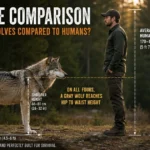
A gray wolf stands 66 to 84 cm tall at the shoulder. That puts it at roughly mid-thigh to hip height on an average adult human.
Its long, powerful legs are built for covering ground — not just for height. Wolves can travel up to 30 miles in a single day while tracking prey.
Weight Range
Gray wolf weight varies more than any other measurement. Adults range from 23 kg (50 lbs) in southern populations to 68 kg (150 lbs) in northern ones.
The heaviest gray wolf ever recorded weighed 79.4 kg (175 lbs) — shot in Alaska in 1939. That is heavier than many adult humans.
Tail Length
The bushy tail runs 35 to 52 cm long. It is not just for balance. Tail position is a key part of wolf pack communication — a raised tail signals dominance, a tucked tail signals submission.
The tail tip is often black, which makes it easy to spot in the field and helps distinguish wolves from coyotes and domestic dogs at a distance.
Male vs Female Gray Wolf Size
Sexual dimorphism is clear in gray wolves. Males are consistently larger than females.
| Measurement | Male | Female |
|---|---|---|
| Weight | 30 – 68 kg | 23 – 55 kg |
| Body Length | 1.6 – 1.8 m | 1.5 – 1.65 m |
| Shoulder Height | 71 – 84 cm | 66 – 76 cm |
Male gray wolves average about 20% heavier than females. That size advantage matters during hunts — males typically engage large ungulates like elk and bison more directly.
Female wolves are slightly smaller but are not weaker in pack function. The alpha female leads den selection, pup rearing, and often drives pack movement decisions.
More Posts:How Big Is a Mexican Wolf? Size, Weight, Height & Facts – 2026
How Age Affects Gray Wolf Size
Gray wolf pups are born at just 400–500 grams — blind, deaf, and fully dependent on their mother.
By 3 months, pups weigh around 7–10 kg. By 6 months, they approach half adult weight. Most wolves reach near-adult size by 12 months, but full body mass and muscle density develop closer to 2–3 years of age.
Males keep adding bulk even after that, which is why the largest gray wolves are typically older, well-fed adult males in high-latitude populations.
How Big Is a Gray Wolf Compared to a Human?
Most people are surprised the first time they stand near a gray wolf. The numbers alone do not capture it.
Height Comparison
At 66 to 84 cm at the shoulder, a gray wolf on all fours stands between mid-thigh and hip level on an average adult. It does not look enormous — until it raises its head.
When a gray wolf lifts its head and stands tall, it can reach chest height on many people. That moment changes how you see the animal.
Weight Comparison
A large male wolf at 68 kg (150 lbs) is heavier than the average American woman and comparable to a light adult man. A wolf at that weight is pure muscle and bone — no excess body fat, built entirely for endurance and power.
The average gray wolf weight of around 40 kg is closer to a medium-sized dog — but the wolf’s leg length, jaw strength, and build make it feel significantly more imposing in person.
Gray Wolf Size by Subspecies — Which Is the Biggest?
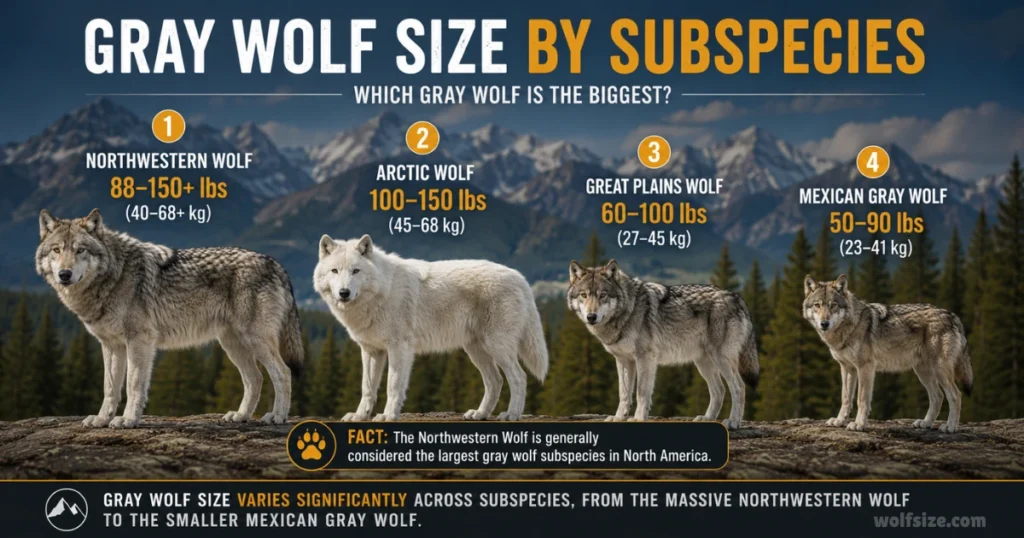
Gray wolf size varies dramatically across subspecies. There are between 5 and 24 recognized subspecies depending on the classification system used. For USA audiences, four matter most.
Northwestern Wolf (Canis lupus occidentalis)
The Northwestern wolf — also called the Rocky Mountain wolf — is the largest subspecies found in the lower 48 states. Adults commonly weigh 40 to 65 kg, with some exceeding 70 kg.
These wolves were reintroduced to Yellowstone National Park in 1995 from Canadian stock. Their return transformed the park’s ecosystem in ways scientists are still studying. The average pack in Yellowstone numbers 10 individuals, with territorial ranges exceeding 300 square miles.
Great Plains Wolf (Canis lupus nubilus)
The Great Plains wolf is medium-sized within the species, typically weighing 27 to 45 kg. It is the subspecies most common in Minnesota, Wisconsin, and Michigan — the core of the Western Great Lakes population, which holds around 4,000 wolves.
It is longer-legged than many people expect, built for covering the open terrain of the American Midwest.
Arctic Wolf (Canis lupus arctos)
The Arctic wolf is one of the largest subspecies by weight, with males reaching 45 to 68 kg. It is also the most visually distinctive — pure white coat, shorter ears, and a stockier build that reduces heat loss in temperatures that can drop to -30°C.
Arctic wolves in northern Canada and Greenland occupy some of the most remote territories on Earth. Their pack territories can exceed 1,000 square miles due to the scarcity of prey.
Mexican Gray Wolf (Canis lupus baileyi)
The Mexican gray wolf — called the “lobo” — is the smallest and most endangered gray wolf subspecies in North America. Adults weigh just 23 to 41 kg, and shoulder height rarely exceeds 72 cm.
As of 2024, fewer than 300 Mexican gray wolves exist in the wild, primarily in Arizona and New Mexico under a federal recovery program. It is listed as Endangered under the Endangered Species Act (ESA).
More Posts:Arabian Wolf Size: How Big Is the World’s Smallest Wolf? 2026
Gray Wolf Size vs Other Wolves & Animals
Gray Wolf vs Red Wolf
| Measurement | Gray Wolf | Red Wolf |
|---|---|---|
| Weight | 23 – 68 kg | 23 – 39 kg |
| Body Length | 1.5 – 1.8 m | 1.4 – 1.65 m |
| Shoulder Height | 66 – 84 cm | 66 – 79 cm |
The red wolf (Canis rufus) is consistently smaller and leaner.
It occupies an ecological middle ground between the gray wolf and the coyote. With fewer than 20 red wolves remaining in the wild as of 2024, it is the world’s most endangered wolf species.
Gray Wolf vs Coyote
The coyote (Canis latrans) weighs just 7 to 21 kg — roughly one-third of an average gray wolf. Its body length tops out around 1.35 meters, and its shoulder height rarely exceeds 53 cm.
Gray wolves and coyotes occupy overlapping ranges in many parts of North America, but wolves actively suppress coyote populations where they coexist. Studies in Yellowstone showed coyote populations dropped significantly after wolf reintroduction.
Gray Wolf vs German Shepherd
This comparison gets searched more than most wildlife comparisons — and for good reason. People want to understand wolf size in terms they know.
| Measurement | Gray Wolf | German Shepherd |
|---|---|---|
| Weight | 23 – 68 kg | 22 – 40 kg |
| Shoulder Height | 66 – 84 cm | 55 – 65 cm |
| Body Length | 1.5 – 1.8 m | 1.1 – 1.4 m |
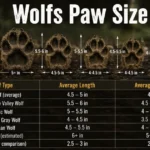
A gray wolf is significantly taller, longer, and heavier than a German Shepherd. The wolf also has longer legs relative to body size, a broader skull, and much larger paws.
A wolf’s bite force — around 400 PSI — is roughly double that of a German Shepherd.
More Posts:Dire Wolf Size: How Big Were These Ice Age Predators, Really?
FAQ — Gray Wolf Size Questions Answered
How big is a fully grown gray wolf?
A fully grown gray wolf measures 1.5 to 1.8 meters in body length, stands 66 to 84 cm at the shoulder, and weighs 23 to 68 kg. Northern males are the largest. Full size is reached at around 2 to 3 years of age.
How much does a gray wolf weigh?
Gray wolf weight ranges from 23 kg (50 lbs) in smaller southern subspecies to 68 kg (150 lbs) in large northern wolves. The record weight was 79.4 kg (175 lbs), recorded in Alaska.
How tall is a gray wolf at the shoulder?
Gray wolves stand 66 to 84 cm (26 to 33 inches) tall at the shoulder — roughly mid-thigh to hip height on an average adult human.
Is a gray wolf bigger than a German Shepherd?
Yes. A gray wolf is taller, longer, and heavier than a German Shepherd in every measurement. Wolves also have larger paws, a broader skull, and significantly more bite force.
What is the largest gray wolf ever recorded?
The largest gray wolf on record weighed 79.4 kg (175 lbs) and was shot in Alaska in 1939. In modern observations, wolves exceeding 65 kg are considered exceptionally large.
Are female gray wolves smaller than males?
Yes. Female gray wolves are about 20% smaller than males on average. They typically weigh 23 to 55 kg and measure slightly shorter in body length and shoulder height. Despite the size difference, females play equal — sometimes dominant — roles in pack leadership and decision-making.

Robert Taylor is a content researcher and writer specializing in dimensions, measurements, and size comparison guides. He creates clear, practical content that helps readers understand real-world sizes and measurements with confidence. His work focuses on delivering accurate, easy-to-use dimension information in both U.S. and metric units.