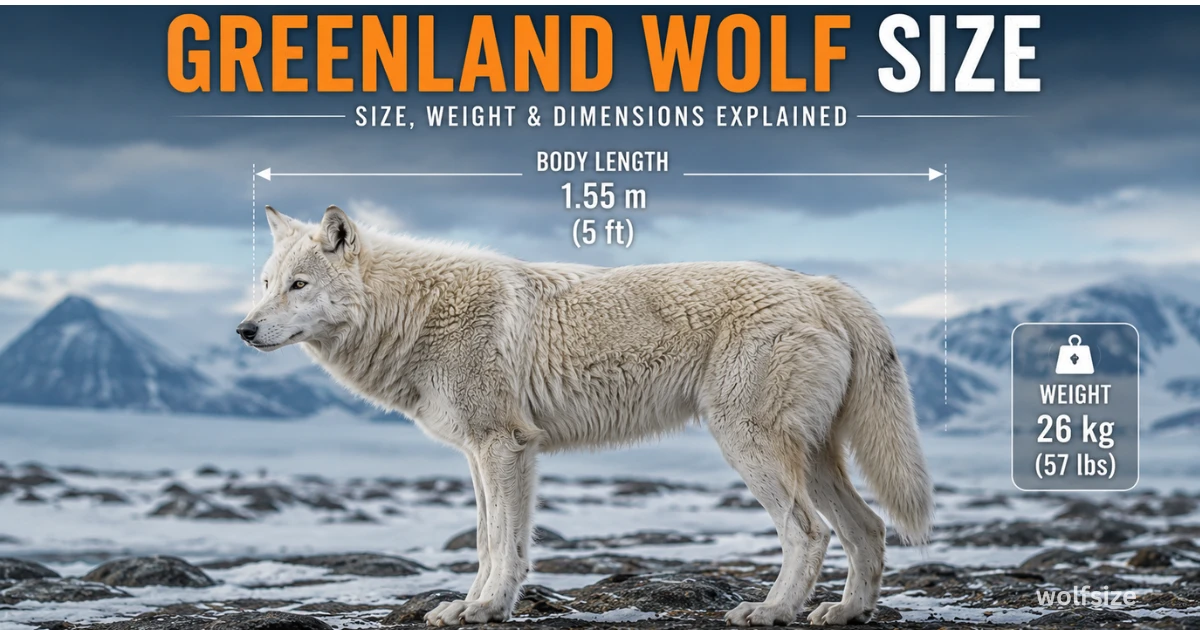
The Greenland wolf is a relatively small Arctic wolf subspecies, weighing about 57 pounds (26 kg) and measuring roughly 5 feet (155 cm) in total length from nose to tail. Despite living in one of the world’s harshest environments, it is generally lighter than many other Arctic wolf populations.
Only five wolves were ever measured for this estimate, back in 1906. Everything we think we know about Greenland wolf size traces back to that one small sample.
Greenland Wolf Size at a Glance
Average Weight and Length of the Greenland Wolf
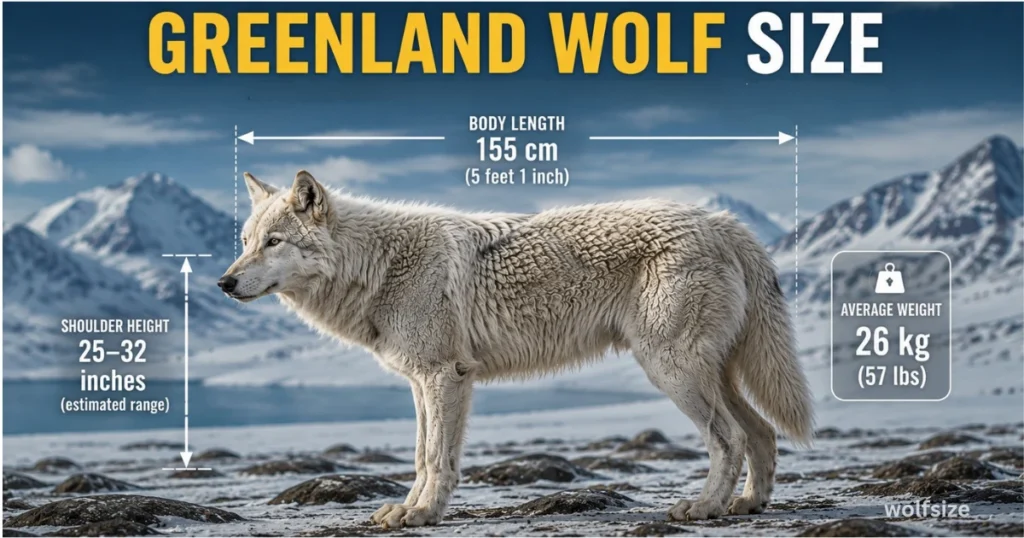
The average Greenland wolf weighs 26 kg (57 lbs) and reaches about 155 cm (5 feet 1 inch) in body length. This places it in the small-to-medium range for Canis lupus orion, the scientific name given to this subspecies by zoologist Reginald Pocock in 1935.
Greenland Wolf Height at the Shoulder
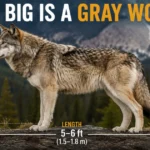
No dedicated shoulder height measurement exists specifically for the Greenland wolf. Based on its close relative, the Arctic wolf, shoulder height in similar Arctic gray wolf populations typically falls between 25 and 32 inches.
Male vs. Female Greenland Wolf Size Differences
Detailed male-versus-female data hasn’t been published for this subspecies, mainly because the population is so small and hard to study. In most gray wolf populations, males run 15 to 20% heavier than females — a pattern likely true here too, though not yet confirmed by direct research.
More Posts:Vancouver Island Wolf Size: Complete Weight, Height, and Length Guide
Greenland Wolf Size Compared to Other Wolves
Greenland Wolf vs. Arctic Wolf Size
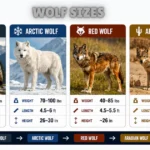
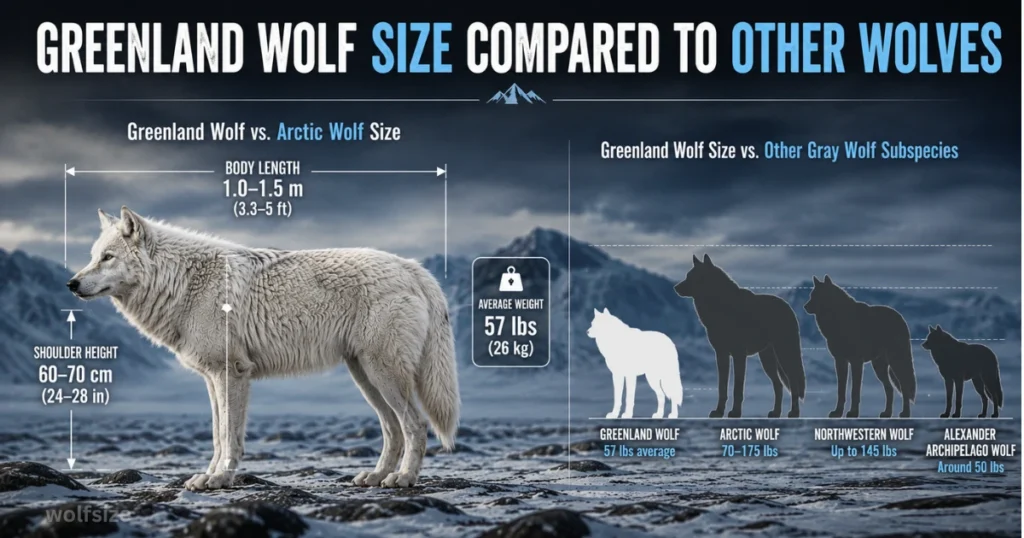
The Arctic wolf (Canis lupus arctos) typically weighs 70 to 175 pounds and stretches 3.2 to 5.9 feet long. That means the Greenland wolf’s recorded weight sits well below the Arctic wolf’s average range, even though both animals share the same pale coat and tundra habitat.
Greenland Wolf Size vs. Other Gray Wolf Subspecies
Compared across the wolf family, size varies dramatically by region. The Northwestern wolf, one of North America’s largest, can weigh up to 145 pounds. The Alexander Archipelago wolf, a small coastal subspecies, tops out around 50 pounds.
The Greenland wolf’s 57-pound average lands closer to the small end of this spectrum — similar in scale to the Alexander Archipelago wolf rather than the larger mainland populations.
More Posts:Italian Wolf Size: Weight, Length, and Height Explained
Why Greenland Wolf Size Data Is Disputed
The 1906 Specimen Problem
Every widely cited weight and length figure for this subspecies comes from just five wolves captured in northeast Greenland during the winter of 1906. Five animals cannot represent an entire population — especially one spread across a harsh, isolated Arctic tundra range.
Malnutrition vs. Natural Body Size
Winter is brutal in Greenland’s high Arctic. Food is scarce, and prey is hard to find. Scientists believe the low body weight recorded in 1906 may reflect seasonal malnutrition, not a genetically smaller wolf. In other words, hungry wolves were mistaken for naturally small wolves.
What Modern Genetic Studies Reveal
A 2018 genomic study published in PLOS Genetics identified a distinct “Polar wolf” population unique to Greenland and Ellesmere Island. The research found unusually high inbreeding and low genetic diversity, consistent with a population that’s been isolated from other North American wolves for a long time.
Greenland Wolf Size vs. Humans and Everyday Objects
How Tall Is a Greenland Wolf Compared to a Person?
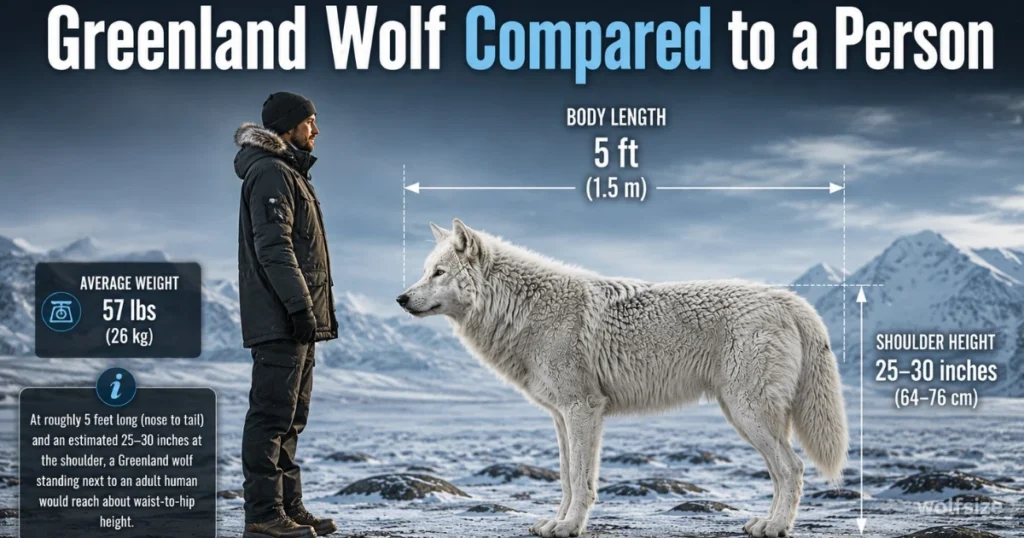
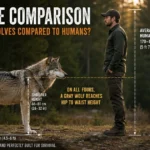
At roughly 5 feet long (nose to tail) and an estimated 25-30 inches at the shoulder, a Greenland wolf standing next to an adult human would reach about waist-to-hip height. It’s shorter than a person standing upright, but its long body and lean, muscular build make it look larger up close.
Greenland Wolf Weight Compared to Familiar Objects
At 57 pounds, a Greenland wolf weighs about the same as a large dog breed, like a Labrador Retriever, or roughly four to five average bowling balls. That’s a helpful mental anchor when picturing this wolf’s actual size in the wild.
FAQs About Greenland Wolf Size
How Big Is a Greenland Wolf?
A Greenland wolf averages 57 pounds (26 kg) in weight and measures about 5 feet (155 cm) in total length. These figures come from a small sample collected in 1906, so they should be considered rough estimates rather than definitive averages.
Is the Greenland Wolf Bigger Than the Arctic Wolf?
No. The Arctic wolf is generally much larger, typically weighing between 70 and 175 pounds (32–79 kg). By comparison, the Greenland wolf’s recorded average weight of 57 pounds (26 kg) makes it noticeably lighter.
What Is the Smallest Wolf Subspecies?
The Baffin Island wolf is generally regarded as the smallest Arctic gray wolf subspecies, with the Greenland wolf often considered a close contender due to its relatively low recorded body weight.
How Much Does a Greenland Wolf Weigh?
Based on historical specimen data collected in 1906, a Greenland wolf weighs an average of about 26 kg (57 lbs). However, modern population-wide weight data remains limited.
Why Are Greenland Wolves So Small and Light?
Scientists believe that seasonal malnutrition during harsh Arctic winters, rather than genetics alone, may explain the relatively low body weights recorded for Greenland wolves. Limited prey availability and extreme environmental conditions can significantly affect body condition.
Are Greenland Wolves the Same Size as Gray Wolves?
No. Greenland wolves are generally smaller and lighter than many mainland gray wolf populations. However, they are similar in size to some smaller northern subspecies, including the Alexander Archipelago wolf and other Arctic-adapted wolves.
Conclusion
The Greenland wolf is one of the lightest and least-studied wolf subspecies on Earth, with an average weight of 57 pounds and a length of about 5 feet.
But those numbers come with a major asterisk: they’re based on just five wolves examined in 1906, likely underweight from a harsh Arctic winter. Modern genetic research tells a richer story — one of deep isolation, low genetic diversity, and a population still fighting to survive at roughly 100 to 200 individuals. Until fresh field data emerges, the true size of this elusive predator remains, fittingly, one of the Arctic’s quieter mysteries.

Robert Taylor is a content researcher and writer specializing in dimensions, measurements, and size comparison guides. He creates clear, practical content that helps readers understand real-world sizes and measurements with confidence. His work focuses on delivering accurate, easy-to-use dimension information in both U.S. and metric units.