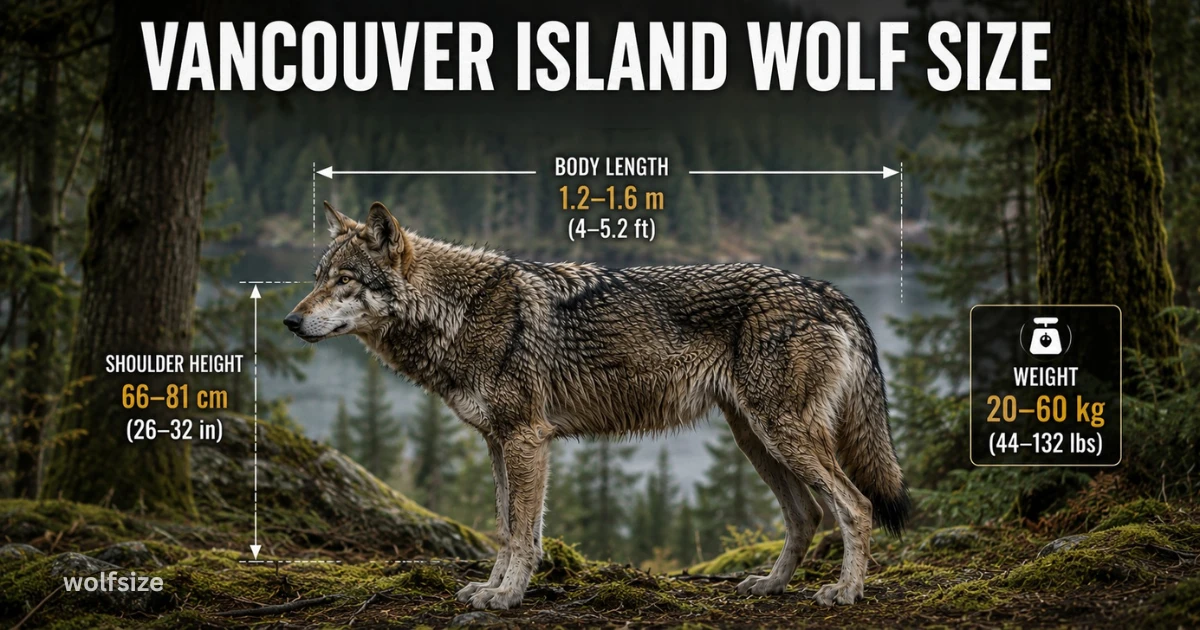
The Vancouver Island wolf is a medium-sized gray wolf subspecies that typically weighs 44–132 pounds (20–60 kg) and stands about 26–32 inches (66–81 cm) tall at the shoulder. It is generally smaller and lighter than most mainland gray wolves, an adaptation that helps it thrive in the coastal forests of Vancouver Island.
This coastal wolf, known scientifically as Canis lupus crassodon, lives only on Vancouver Island and nearby coastal areas of British Columbia. Its compact body size helps it move easily through dense rainforest and swim between islands in search of food.
Vancouver Island Wolf Size at a Glance
Average Vancouver Island Wolf Weight
An adult Vancouver Island wolf weight typically falls between 44 and 132 pounds (20 to 60 kilograms). A large male can reach the size of an Alaskan malamute.
Average Vancouver Island Wolf Height and Length
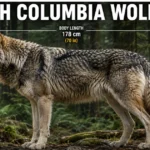
This wolf measures about 26 to 32 inches high at the shoulder. From nose to tail, its body length runs 4 to 5 feet. That’s shorter than many mainland cousins, giving it a leaner, more compact frame.
Vancouver Island Wolf Size by Sex
Male Vancouver Island Wolf Size
Male Vancouver Island wolves are the larger sex. They tend to weigh toward the upper end of the range, often near or above 100 pounds, with a broader chest and heavier bone structure than females.
Female Vancouver Island Wolf Size
Female Vancouver Island wolves are smaller and lighter, usually weighing less than their male pack mates. Despite the size gap, females often hold equal rank as the alpha female, leading the pack alongside the alpha male.
More Posts:Indian Wolf Size: Weight, Height, and Length Explained
Vancouver Island Wolf Size Compared to Other Wolves
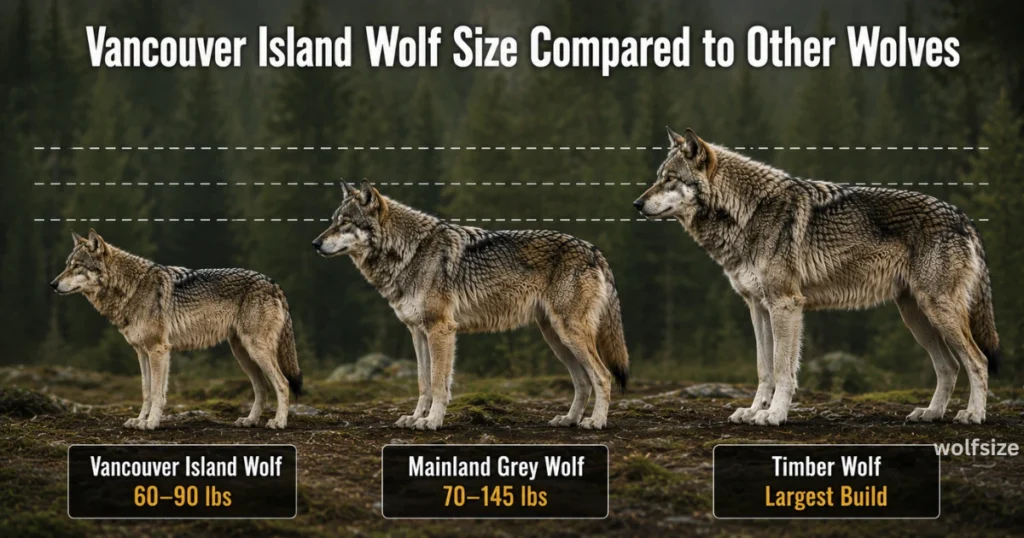
Vancouver Island Wolf vs. Mainland Grey Wolf Size
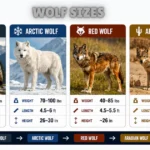
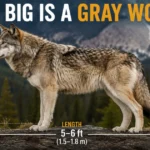
Mainland grey wolves run larger overall. Females typically weigh 60 to 100 pounds and males 70 to 145 pounds, with a shoulder height of 26 to 32 inches, similar in height but generally heavier than the island subspecies.
Vancouver Island Wolf vs. Timber Wolf Size
Timber wolves, found across forested regions of North America, often outweigh Vancouver Island wolves by a wide margin. Northern populations can grow much larger, since wolf size tends to increase with colder climates and bigger prey.
More Posts:Italian Wolf Size: Weight, Length, and Height Explained
Why Vancouver Island Wolf Size Differs From Other Subspecies
How a Marine Diet Affects Vancouver Island Wolf Size
Unlike inland wolves that rely heavily on large ungulates, coastal populations of this subspecies eat a diet that can be up to 90 percent marine-based, including salmon, herring eggs, and shellfish. This lighter, protein-rich but calorie-lean diet supports a smaller frame than a deer- or elk-heavy diet would.
How Island Habitat and Prey Availability Shape Size
Vancouver Island offers dense rainforest and limited large prey compared to mainland territories. Smaller, more available prey like black-tailed deer and small mammals favors a more compact body type, one built for agility over raw size.
FAQ’s About Vancouver Island Wolf Size
How big is a Vancouver Island wolf?
It stands 26 to 32 inches tall and measures 4 to 5 feet long, nose to tail.
How much does a Vancouver Island wolf weigh?
Adults weigh between 44 and 132 pounds, depending on sex and age.
Is the Vancouver Island wolf smaller than a grey wolf?
Yes, it’s generally smaller and lighter than most mainland grey wolf populations.
How tall is a Vancouver Island wolf at the shoulder?
It stands roughly 26 to 32 inches at the shoulder, similar in height to mainland wolves.
What is the biggest Vancouver Island wolf ever recorded?
Large males can approach 132 pounds, roughly the size of an Alaskan malamute.
Do male and female Vancouver Island wolves differ in size?
Yes, males are noticeably heavier and larger-boned than females.
Conclusion
Vancouver Island wolf size reflects a subspecies shaped by its island home.
Smaller than mainland grey wolves and timber wolves, this coastal predator trades bulk for agility, built by a marine-heavy diet and dense rainforest terrain. Understanding its size, from pup to adult, from female to male, paints a clear picture of an animal perfectly suited to the coastline it calls home.

Robert Taylor is a content researcher and writer specializing in dimensions, measurements, and size comparison guides. He creates clear, practical content that helps readers understand real-world sizes and measurements with confidence. His work focuses on delivering accurate, easy-to-use dimension information in both U.S. and metric units.