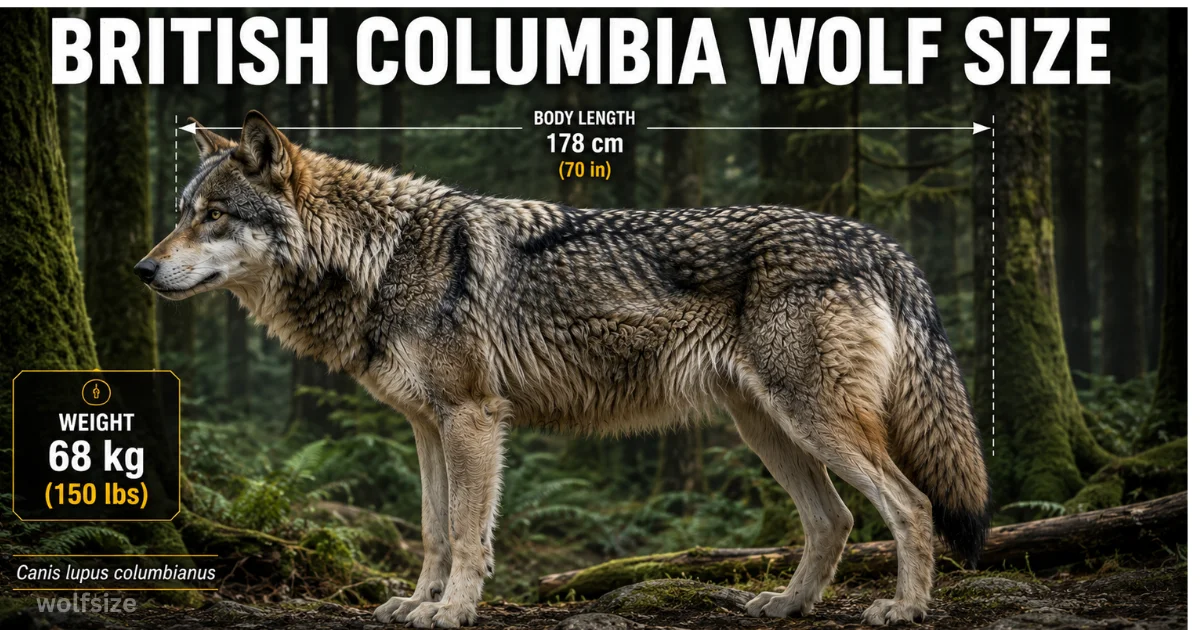
The British Columbia wolf (Canis lupus columbianus) is one of the largest wolves in North America, reaching weights of up to 150 pounds (68 kg) and measuring around 70 inches (178 cm) from nose to tail.
If you want real numbers on British Columbia wolf size, how it stacks up against other wolves, and why it grows so large, you’re in the right place. No fluff, just facts.
How Big Is the British Columbia Wolf?
British Columbia Wolf Weight (Male vs Female)
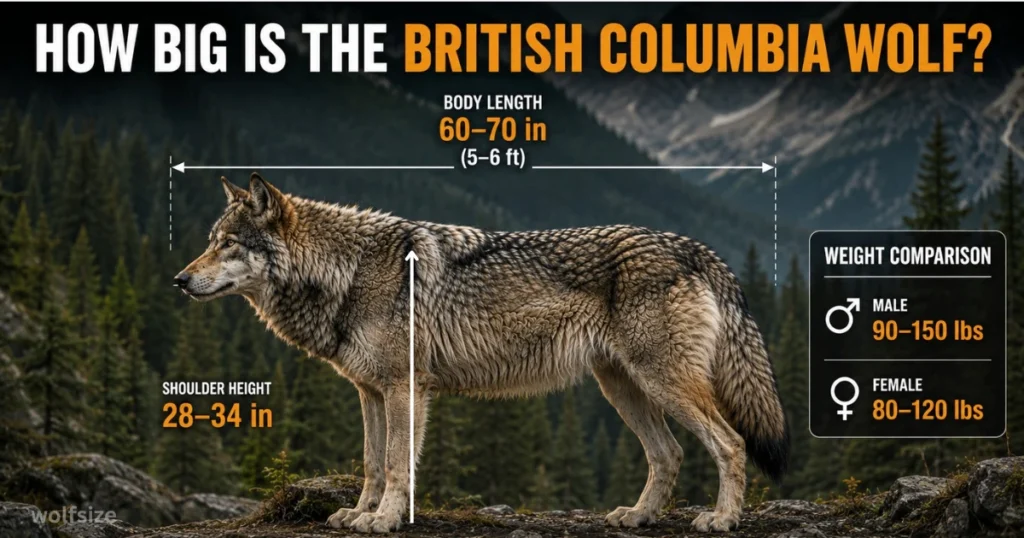
Male British Columbia wolves typically weigh 90 to 150 pounds. Females are lighter, usually falling between 80 and 120 pounds. This size gap between the sexes is called sexual dimorphism, and it’s common across nearly all wolf subspecies.
British Columbia Wolf Length: Nose to Tail
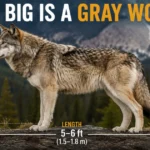
From nose to tail tip, this wolf measures 60 to 70 inches (about 5 to 6 feet). That’s longer than most large dog breeds standing on all fours. Roughly a third of that length is tail alone.
British Columbia Wolf Height at the Shoulder
Based on comparable coastal and northern gray wolf subspecies, the British Columbia wolf likely stands around 28 to 34 inches at the shoulder — tall enough to look an adult human in the thigh, sometimes the hip.
More Posts:Great Plains Wolf Size: Weight, Length & Height Explained
British Columbia Wolf Size vs Other Gray Wolf Subspecies
British Columbia Wolf vs Northwestern Wolf Size
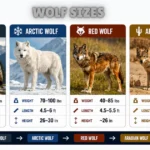
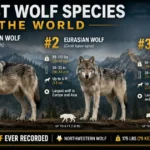
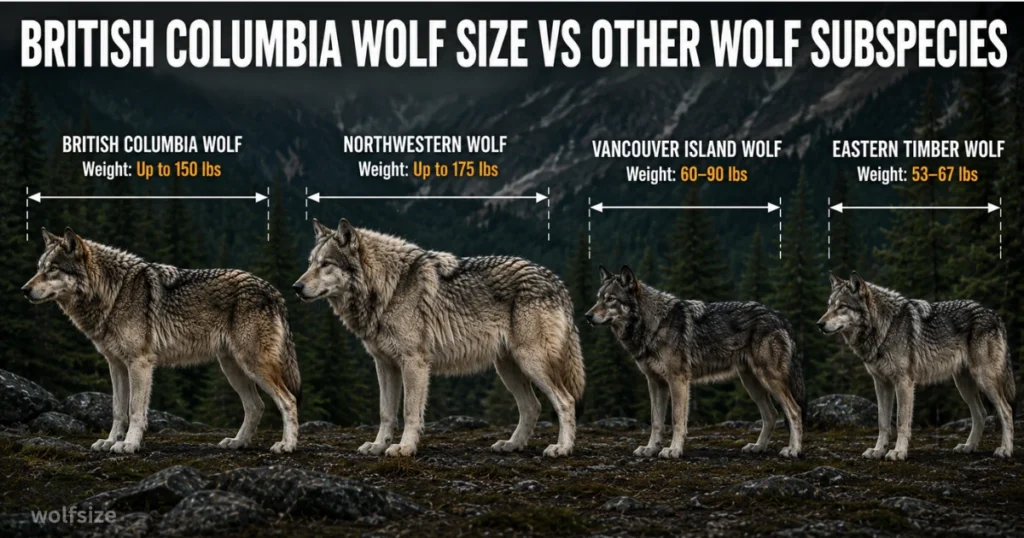
The Northwestern wolf (Canis lupus occidentalis) is often called the largest wolf subspecies alive, with males reaching up to 175 pounds. The British Columbia wolf runs close behind, usually topping out around 150 pounds. Both share thick builds adapted to cold, rugged terrain.
British Columbia Wolf vs Vancouver Island Wolf Size
The Vancouver Island wolf, a close coastal cousin, is noticeably smaller — typically 60 to 90 pounds. Its diet leans heavily on seafood like salmon and shellfish, which researchers believe limits its overall body mass compared to inland-feeding wolves.
British Columbia Wolf vs Eastern Timber Wolf Size
The Eastern wolf (sometimes called the Algonquin wolf) is a mid-sized subspecies, weighing just 53 to 67 pounds. That makes it roughly half the weight of a large male British Columbia wolf, despite both being gray wolf relatives.
More Posts:Alaskan Tundra Wolf Size: Weight, Length & Height Explained
What Makes the British Columbia Wolf So Large?
Bergmann’s Rule and Cold-Climate Body Size
Bergmann’s rule is a biological principle stating that animals living in colder, higher-latitude climates tend to grow larger bodies than relatives in warmer regions. A bigger body holds heat better because it has less surface area relative to its mass. British Columbia’s cold, wet, northern climate fits this pattern perfectly.
Coastal Diet vs Interior Diet
Wolves along British Columbia’s coast eat a mix of salmon, deer, and marine life, while interior populations rely more on moose, elk, and caribou. Access to large-bodied ungulates like moose tends to support bigger wolf populations, since hunting large prey favors bulkier, more powerful wolves.
British Columbia Wolf Size Compared to Humans and Dogs
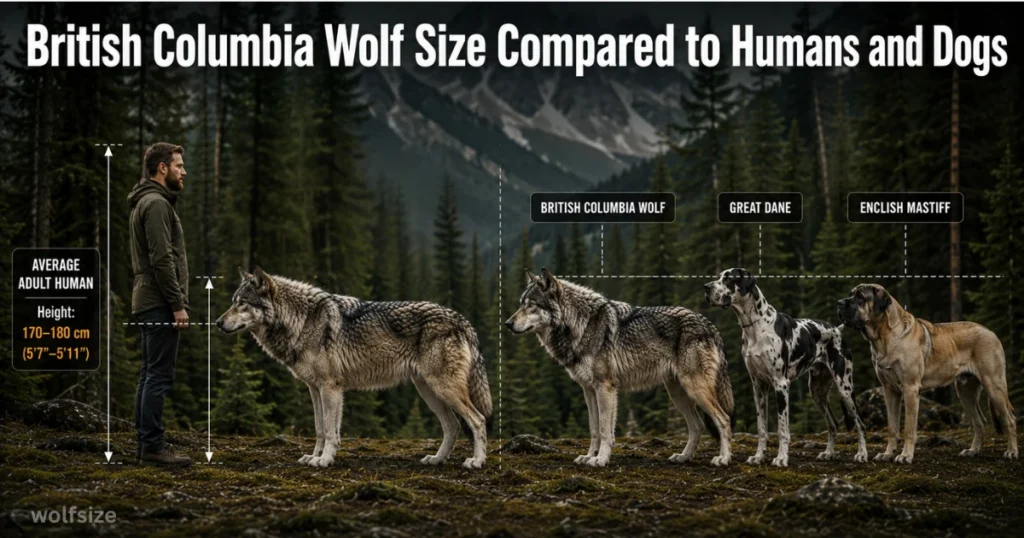
British Columbia Wolf Size vs Average Adult Human
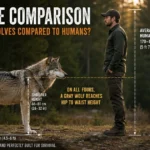
A large male British Columbia wolf can weigh close to what an average adult woman weighs, and stand tall enough that its head reaches near an adult’s waist or hip when on all fours. Standing on hind legs, some wolves can reach 6 feet or taller.
British Columbia Wolf Size vs Large Dog Breeds
Compared to a Great Dane or English Mastiff, the British Columbia wolf is leaner but often just as long, if not longer. Unlike a domestic dog, though, its body is built entirely for endurance running and takedown power, not show or companionship.
British Columbia Wolf Paw Print and Track Size
Wolf tracks from large subspecies like this one commonly measure 4 to 5 inches long, noticeably bigger than the print of an average domestic dog. Trackers often use print size, stride length, and claw marks together to confirm a wolf sighting versus a large dog.
British Columbia Wolf Growth: From Pup to Full-Grown Adult
British Columbia Wolf Pup Birth Weight
Wolf pups, including this subspecies, are born weighing roughly 1 pound, blind and completely dependent on their mother and pack.
Growth Rate in the First Year
Pups gain weight quickly, often 2 to 3 pounds per week during peak growth months. By six months old, a pup can already resemble a lean, gangly adult in body shape, though it still lacks full adult muscle mass.
When Do British Columbia Wolves Reach Full Adult Size
Most wolves reach close to full adult size by one year old, though muscle mass and overall bulk continue filling out until around two to three years of age.
More Posts:Iberian Wolf Size: How Big Do These Wolves Really Get?
FAQs About British Columbia Wolf Size
How much does a British Columbia wolf weigh?
It typically weighs 80 to 150 pounds, with males on the heavier end.
How long is a British Columbia wolf from nose to tail?
Adults measure 60 to 70 inches long, including the tail.
Is the British Columbia wolf the largest wolf subspecies?
It’s one of the largest, but the Northwestern wolf edges it out slightly in average size.
How tall is a British Columbia wolf at the shoulder?
Roughly 28 to 34 inches, based on comparable large gray wolf subspecies.
Are male British Columbia wolves bigger than females?
Yes, males are usually 20 to 30 pounds heavier than females.
Conclusion
The British Columbia wolf earns its reputation as one of North America’s biggest wolves — a big-bodied, dark-coated predator shaped by cold climate, big prey, and centuries of adaptation along Canada’s rugged coast and interior. Whether you’re comparing it to other subspecies or picturing it next to a large dog, the numbers make one thing clear: this is not a small wolf.

Robert Taylor is a content researcher and writer specializing in dimensions, measurements, and size comparison guides. He creates clear, practical content that helps readers understand real-world sizes and measurements with confidence. His work focuses on delivering accurate, easy-to-use dimension information in both U.S. and metric units.