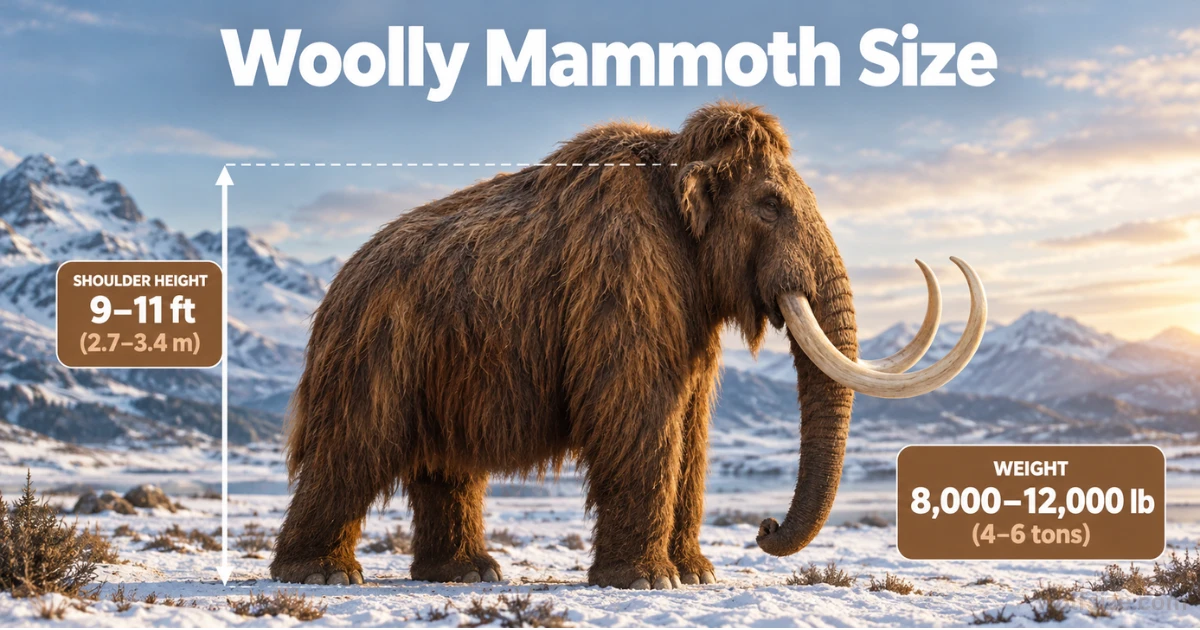
The woolly mammoth varied in size by sex, with adult males typically standing 9–11 feet (2.7–3.4 meters) tall at the shoulder and weighing around 8,000–12,000 pounds (4–6 tons). Females were smaller at about 8–9.5 feet tall and 6,600–8,800 pounds (3–4 tons), while large males had tusks reaching 13–15 feet long.
This guide breaks down woolly mammoth size by height, weight, sex, age, and location — using verified fossil data, not guesswork.
How Big Was the Woolly Mammoth?
Woolly Mammoth Height
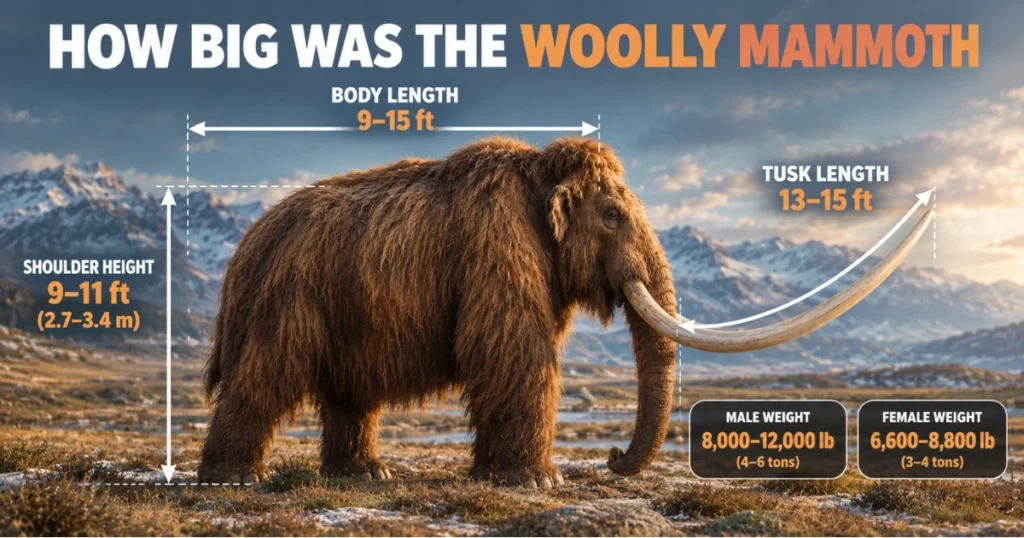
Adult male mammoths stood 9 to 11 feet tall (2.7 to 3.4 meters) at the shoulder. Females were smaller, usually 8 to 9.5 feet tall (2.4 to 2.9 meters).
This height came from a domed skull and a tall fatty hump behind the neck, which made the animal look even bigger than it actually was.
Woolly Mammoth Weight
Males tipped the scales at 8,000 to 12,000 pounds (roughly 4 to 6 tons). Females weighed less, around 6,600 to 8,800 pounds (3 to 4 tons).
For comparison, that’s heavier than a full-grown African bull elephant in many cases.
Woolly Mammoth Body Length and Tusk Length
Body length ran 9 to 15 feet, not counting the trunk. The most striking feature, though, was the tusks.
These curved incisors grew up to 13 to 15 feet long in big males — longer than the mammoth’s own body length in extreme cases.
Woolly Mammoth Size by Sex and Age
Male vs. Female Woolly Mammoth Size Differences
Male woolly mammoths were noticeably larger than females — a trait called sexual dimorphism. Males carried thicker, longer tusks and had a more pronounced skull dome.
Females stayed smaller and lived in tight-knit, matriarch-led herds, much like elephants today.
Woolly Mammoth Calf Size at Birth
A newborn mammoth calf weighed about 200 pounds (90 kilograms) — roughly the size of a large dog.
Calves nursed on their mother’s milk for two to three years, longer than modern elephant calves, likely because Arctic winters made solid food scarce.
How Fast Did a Woolly Mammoth Grow to Full Size?
Mammoths reached full adult size by their late teens to early twenties, similar to elephants. Scientists track this growth using tusk rings, which record yearly and even seasonal growth patterns, much like tree rings.
More Posts:Siberian Cat Size: How Big Do Siberian Cats Really Get?
Woolly Mammoth Size Comparison
Woolly Mammoth Size vs. Modern Elephant
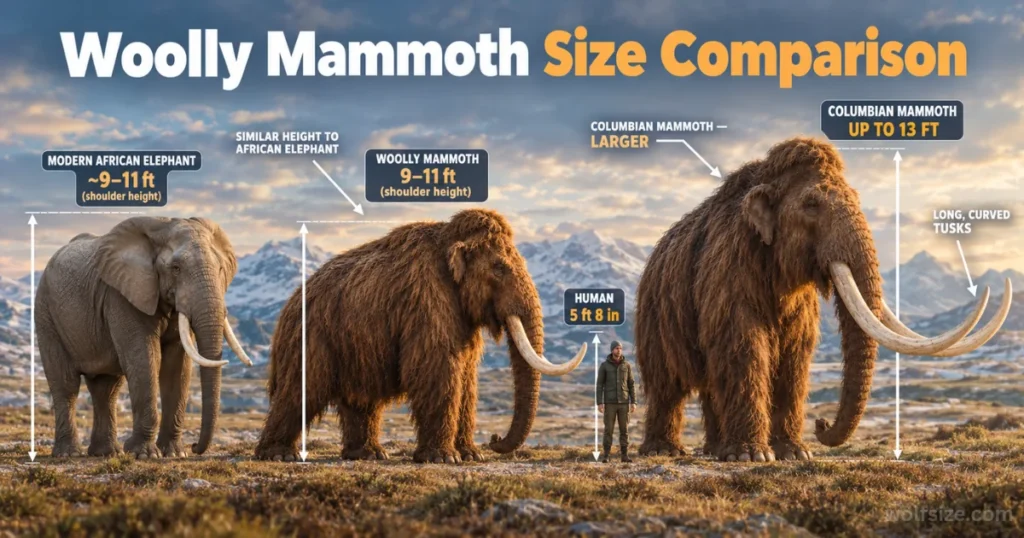
A woolly mammoth was about the same height as a modern African elephant but often heavier due to its thick fat layer and dense muscle mass built for cold survival.
Its tusks were also longer and more curved than any living elephant’s.
Woolly Mammoth vs. Columbian Mammoth and Other Mammoth Species
The Columbian mammoth, a close cousin that lived farther south in warmer climates, was actually bigger than the woolly mammoth — standing up to 13 feet tall.
The woolly mammoth was built smaller and stockier, better suited for cold, not size records.
Woolly Mammoth Size Compared to an Average Human
Stand a 5-foot-8 person next to a woolly mammoth, and the mammoth is roughly 1.7 times taller — and thousands of pounds heavier.
A single mammoth footprint could easily fit two adult human feet side by side.
What Made the Woolly Mammoth So Big?
Cold-Climate Adaptations Behind Its Massive Size
A large body holds heat better than a small one — this is called Bergmann’s rule. Combined with a 4-inch fat layer, small ears, and a short tail, the mammoth’s bulk helped it survive temperatures well below freezing.
Diet and Daily Food Intake That Fueled Its Body Mass
Woolly mammoths ate up to 400 pounds of food a day — mostly grasses, sedges, and shrubs — spending up to 20 hours daily foraging. That kind of intake was necessary to fuel a multi-ton body through brutal winters.
What Tusk Size Reveals About Age and Growth
Tusks grew continuously throughout a mammoth’s life. Researchers slice them open to read internal growth layers, revealing diet, migration patterns, and even the age at which a mammoth died.
Did Woolly Mammoth Size Vary by Location?
Woolly mammoths left behind an incredible fossil trail. On Wrangel Island, isolation caused island dwarfism, shrinking mammoths over generations until the last ones died out roughly 4,000 years ago.
In the US, well-preserved remains have surfaced in Alaska, Montana, North Dakota, and Minnesota, with Alaska producing the best finds.
Size also varied by region — Siberian mammoths grew larger than European ones thanks to richer grasslands, while North American mammoths matched Eurasian sizes due to interbreeding across the Bering land bridge.
More Posts:Ragdoll Cat Size: How Big Do Ragdoll Cats Get?
Woolly Mammoth Size FAQs
Was a Woolly Mammoth Bigger Than an Elephant?
A woolly mammoth was about the same height as a modern elephant but often heavier, thanks to its thick fat and dense build.
Will Woolly Mammoths Be Back in 2028?
No confirmed timeline exists. Genetic engineering projects are underway, but a living mammoth-elephant hybrid hasn’t been born yet.
Has a Human Ever Seen a Woolly Mammoth?
Yes — early humans hunted and lived alongside woolly mammoths, and cave paintings from that era prove direct human contact.
What Killed Off the Woolly Mammoth?
A mix of climate warming and human hunting wiped out most mammoths by 10,000 years ago, with isolated island groups surviving a few thousand years longer.

Robert Taylor is a content researcher and writer specializing in dimensions, measurements, and size comparison guides. He creates clear, practical content that helps readers understand real-world sizes and measurements with confidence. His work focuses on delivering accurate, easy-to-use dimension information in both U.S. and metric units.