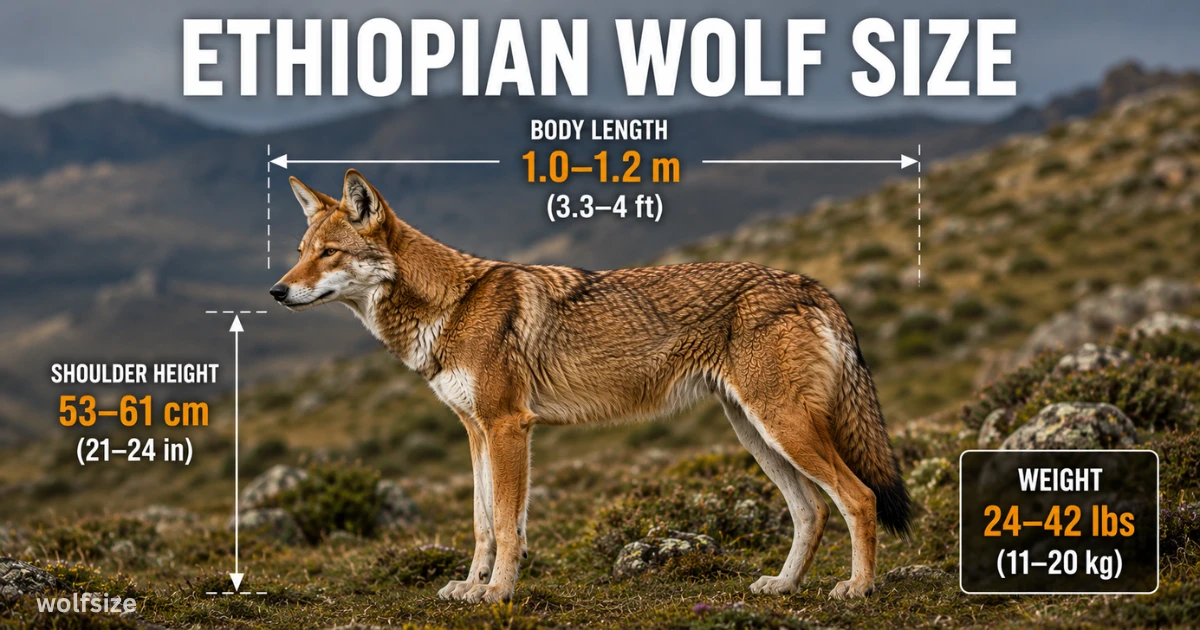
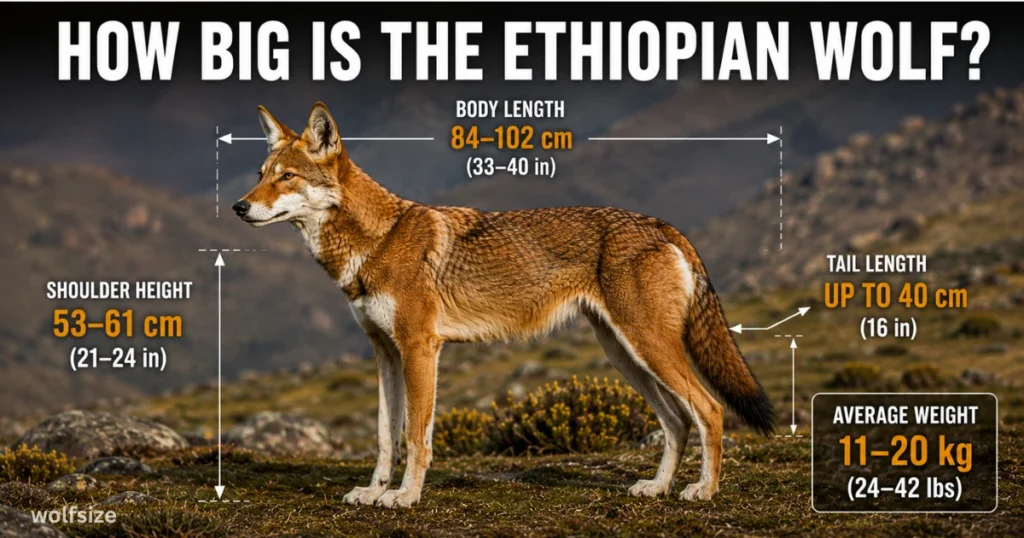
The Ethiopian wolf is similar in size to a coyote, weighing around 24–42 pounds (11–20 kg). It stands about 21–24 inches (53–61 cm) tall at the shoulder and has a slim, long-legged build rather than a bulky body.
This makes it one of the smaller wolf-like species on Earth, and also the rarest. Below, you’ll find the full size breakdown, how it stacks up against other canids, and why males and females don’t grow to the same size.
How Big Is the Ethiopian Wolf?
Average Weight of an Ethiopian Wolf
An adult Ethiopian wolf typically weighs 11 to 20 kilograms (24 to 42 pounds). Males run heavier than females, often by several pounds. This weight range keeps the wolf light enough to move quickly across steep, rocky Afroalpine terrain while chasing rodents.
Average Height and Body Length
Shoulder height sits between 53 and 61 cm (21 to 24 inches). Body length, measured from nose to tail base, runs 84 to 102 cm (33 to 40 inches). Add the tail, and the total length stretches further, since the black-tipped bushy tail alone can reach up to 40 cm.
Quick Ethiopian Wolf Size Chart (Imperial & Metric)
| Measurement | Imperial | Metric |
|---|---|---|
| Weight | 24–42 lb | 11–20 kg |
| Shoulder Height | 21–24 in | 53–61 cm |
| Body Length | 33–40 in | 84–102 cm |
| Lifespan (Wild) | 7–10 years | 7–10 years |
More Posts:Baffin Island Wolf Size: Weight, Height, and Length Explained
Ethiopian Wolf Size Compared to Other Canids
Ethiopian Wolf vs. Coyote Size
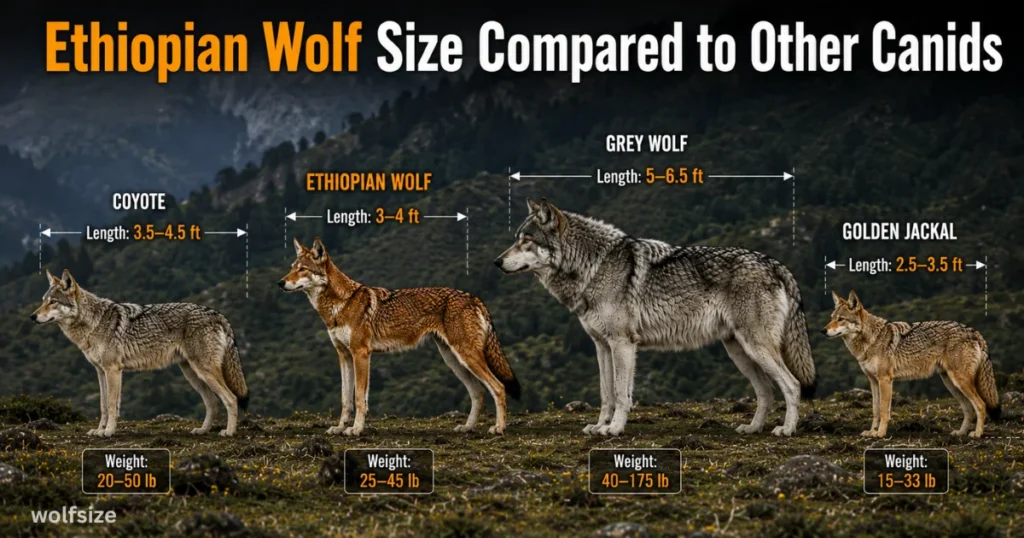
These two are nearly identical in build. Coyotes weigh 20 to 50 lb, putting them right in line with the Ethiopian wolf. Both are lean, long-legged, and built for endurance rather than raw power. This is exactly why early explorers sometimes mistook the Ethiopian wolf for a fox or a coyote relative.
Ethiopian Wolf vs. Grey Wolf Size
The gap here is huge. Grey wolves weigh anywhere from 40 to 175 lb, more than four times the upper weight of an Ethiopian wolf. Grey wolves also stand noticeably taller and carry a heavier, muscular frame built for takedown power against large prey like elk and deer.
Ethiopian Wolf vs. Golden Jackal Size
Golden jackals typically weigh 15 to 33 lb, slightly under the Ethiopian wolf’s average. The Ethiopian wolf is taller at the shoulder and has notably longer legs, built for open-ground sprinting rather than the jackal’s more opportunistic, scavenging lifestyle.
Male vs. Female Ethiopian Wolf Size Differences
Body Size Differences Between Males and Females
Male Ethiopian wolves are consistently larger and heavier than females. Females tend to sit at the lower end of the weight and height ranges, while dominant males occupy the upper end.
Coat Size and Marking Differences
Females also carry a paler coat overall. The sharp red-and-white contrast that defines the species shows up more vividly in males, while female coloring appears softer and less saturated.
Why Male Ethiopian Wolves Are Larger
Size difference between sexes, known as sexual dimorphism, often ties back to breeding roles. In Ethiopian wolf packs, the dominant female is usually the only one that breeds each year, while males compete for territory and mating access — a dynamic that favors larger male body size over generations.
More Posts:Northern Rocky Mountain Wolf Size: Weight, Height, and Length Explained
Physical Features That Shape Ethiopian Wolf Size
Body Shape and Slender Build
The long-limbed, narrow frame reduces heat loss and helps the wolf move efficiently across open grassland. Unlike stockier canids, it doesn’t carry excess bulk, since its diet of small rodents doesn’t require the strength needed to bring down large prey.
Tail Length and Proportions
The tail is proportionally long and bushy, tipped in black. It plays a role in balance during quick turns while chasing prey through uneven, rocky ground.
Leg Length and Its Role in Hunting
Long legs give the Ethiopian wolf a cursorial advantage, meaning it’s built for sustained running. This is essential for a solitary hunter that spends most daylight hours pursuing fast-moving rodents like giant mole rats across open terrain.
FAQs About Ethiopian Wolf Size
How big is an Ethiopian wolf compared to a domestic dog?
It’s about the size of a medium domestic dog, similar to a border collie, but with a leaner, more athletic frame built for running.
What is the average lifespan of an Ethiopian wolf?
Ethiopian wolves live 7 to 10 years in the wild, and can reach up to 12 years in captivity.
Do Ethiopian wolves get bigger in captivity?
No reliable data shows a size increase in captivity. Size is driven mainly by genetics and diet, not environment.
Is the Ethiopian wolf the smallest wolf species?
Yes, it’s widely considered the smallest wolf-like canid, smaller than grey wolves, red wolves, and most other wolf species.
How much do Ethiopian wolf pups weigh at birth?
Exact birth weight isn’t well documented, but like most canids, pups are born small, blind, and fully dependent on their mother.
Conclusion
The Ethiopian wolf size puts it closer to a coyote than a classic wolf. Weighing 11 to 20 kg and standing about 21 to 24 inches tall, it’s built for speed and endurance, not power. With fewer than 440 individuals left in the wild, every physical trait of this rare canid reflects a species finely tuned to survive Ethiopia’s harsh, high-altitude terrain.

Robert Taylor is a content researcher and writer specializing in dimensions, measurements, and size comparison guides. He creates clear, practical content that helps readers understand real-world sizes and measurements with confidence. His work focuses on delivering accurate, easy-to-use dimension information in both U.S. and metric units.