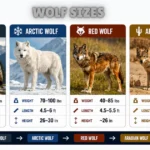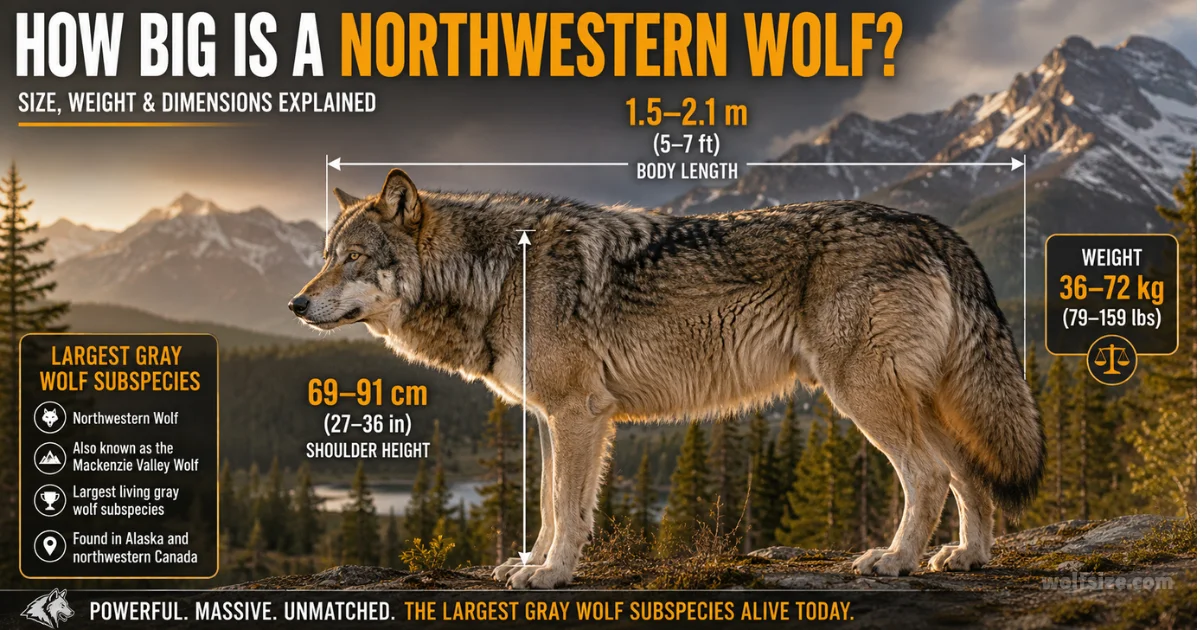
The Northwestern wolf is the largest gray wolf subspecies alive today, with adults weighing 79–159 pounds (36–72 kg), measuring 5–7 feet (1.5–2.1 m) long from nose to tail, and standing 27–36 inches (69–91 cm) tall at the shoulder.
This subspecies, known scientifically as Canis lupus occidentalis, beats out nearly every other living wolf in raw body size.
Wildlife biologists tracking this animal across British Columbia, Alaska, and Yellowstone National Park have recorded some of the biggest weight and length numbers of any wolf on Earth.
This guide breaks down Northwestern wolf size using real field measurements. You’ll see exact weight, length, height, paw size, and how this wolf compares to other wolves and familiar animals.
How Big Is a Northwestern Wolf? Average Weight, Length, and Height
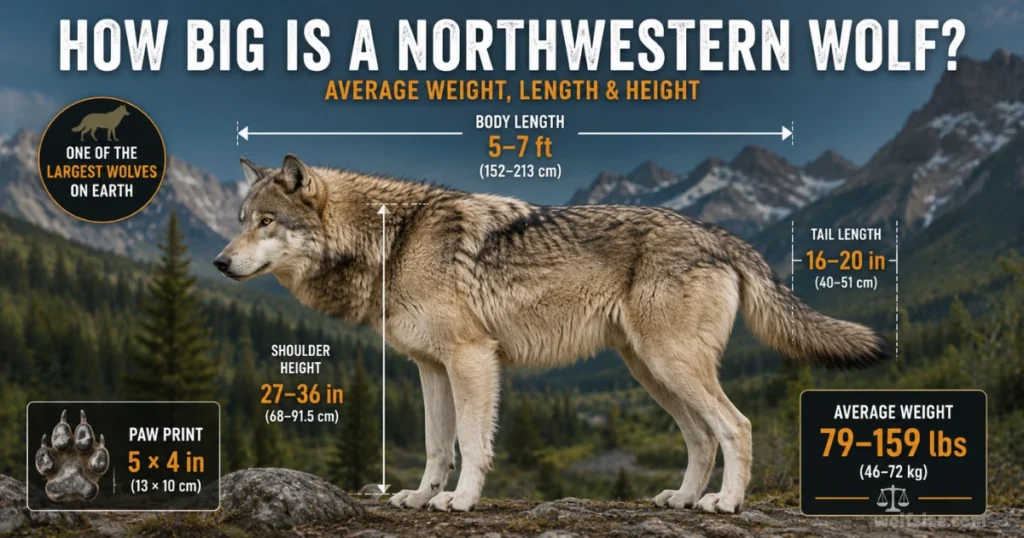
Also known as the Mackenzie Valley wolf or Alaskan timber wolf, this animal is one of the heaviest canids on the planet. Most healthy adults fall between 80 and 160 pounds, depending on sex, season, and location.
Quick dimensions:
- Weight: 79–159 lbs (36–72 kg)
- Body length: 5–7 ft (152–213 cm), nose to tail
- Tail length: roughly 16–20 in (40–51 cm), about a third of total length
- Shoulder height: 27–36 in (68–91.5 cm)
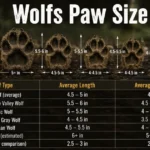
- Paw print: about 5 in long by 4 in wide, with four toes and clear claw marks
Northwestern Wolf Weight: Male vs Female
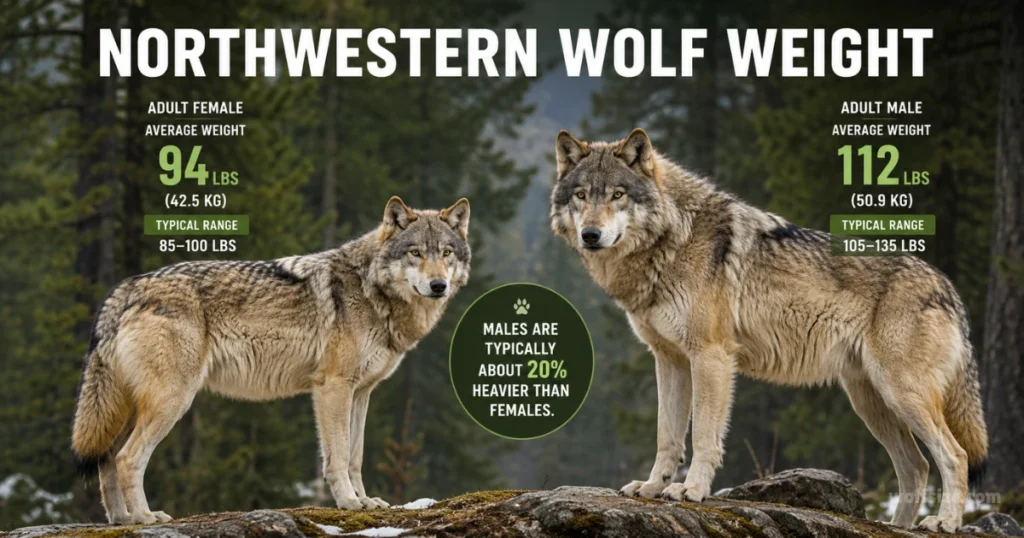
This subspecies shows clear sexual dimorphism, meaning males and females grow to noticeably different sizes. Field studies from British Columbia recorded adult females averaging 94 pounds (42.5 kg), with a range of 85 to 100 pounds. Adult males averaged 112 pounds (50.9 kg), with a range of 105 to 135 pounds.
In Yellowstone National Park, the gap looks similar. Females average around 88 pounds (40 kg), and males average around 110 pounds (50 kg). Across most regions, males outweigh females by roughly 20 percent.
Northwestern Wolf Length and Shoulder Height
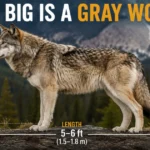
Nose to tail, this wolf usually measures 5 to 6 feet long, with some individuals stretching past 7 feet (213 cm). That makes it one of the longest wolf subspecies alive today.
At the shoulder, it stands 27 to 36 inches tall. That’s roughly hip height on most adults, and taller than almost any domestic dog breed.
Why Northwestern Wolf Size Varies by Region
Location changes everything about this wolf’s body dimensions. Wolves living farther north, closer to the Arctic, tend to grow heavier and longer than wolves in milder parts of the Pacific Northwest.
Prey size matters too. A wolf built to take down moose in the boreal forest needs a bigger frame, wider paws, and a heavier skull than one hunting smaller game in warmer terrain.
Northwestern Wolf Size vs Other Gray Wolf Subspecies
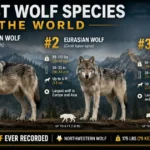
Northwestern Wolf vs Eurasian Wolf Size
The Eurasian wolf averages around 86 pounds (39 kg) and stands 30 to 33 inches at the shoulder, noticeably smaller than most Northwestern wolves.
Build differs too: naturalist John Richardson first described the Northwestern wolf as having a sturdier frame, a rounder head, and a thicker muzzle than its Eurasian cousin.
Northwestern Wolf vs Interior Alaskan Wolf Size
The Interior Alaskan wolf, also called the Yukon wolf, runs a close second. Its average weight sits around 88 pounds (40 kg), with a shoulder height near 33 inches, just behind the Northwestern wolf’s average.
Large males from both subspecies can top 140 pounds, which is why the two are often mixed up by size alone.
Is the Northwestern Wolf the Largest Wolf Subspecies on Earth?
Most wildlife researchers call it “arguably” the largest gray wolf subspecies, since exact rankings shift slightly depending on the study and the season measured. What isn’t disputed: combining weight, length, and shoulder height, this wolf consistently outranks nearly every other living wolf subspecies.
More Posts:Wolf Size Comparison: How Large Are Wolves Compared to Humans? 2026
The Largest Northwestern Wolf Ever Recorded
The 227-Pound Yukon Wolf: Fact-Checking the Record
Wildlife records list a Northwestern wolf taken in Yukon, Canada, at 227 pounds (103 kg), the heaviest wild wolf weight ever documented.
That’s nearly double the average adult weight for this subspecies, so it stands as an extreme outlier, not a typical example.
Northwestern Wolf Size Compared to Familiar Animals
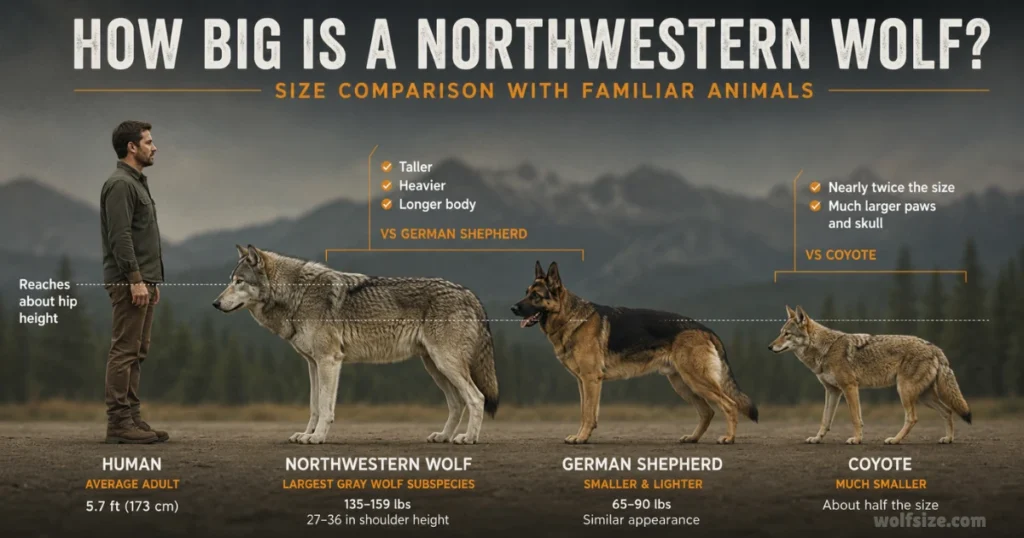
Northwestern Wolf vs German Shepherd Size
A large male German Shepherd typically weighs 65 to 90 pounds and stands about 24 to 26 inches at the shoulder.
A Northwestern wolf often outweighs that by 20 to 70 pounds and stands several inches taller, with a noticeably bigger skull, longer legs, and a longer body length overall.
Northwestern Wolf vs Average Human Height and Weight
On all four legs, this wolf reaches close to hip height on most adults, around 27 to 36 inches. Stretched out nose to tail, its 5 to 7 foot body length can measure longer than the average adult is tall.
By weight, a large male Northwestern wolf, at 135 to 159 pounds, can match or exceed the body weight of an average adult man.
Northwestern Wolf vs Coyote
Gray wolves run roughly twice the size of a coyote. As one of the largest gray wolf subspecies, the Northwestern wolf widens that gap even further, often standing a full foot taller at the shoulder than a coyote.
Tracks make the size difference obvious too. A wolf print measures about 5 inches long by 4 inches wide, nearly double the size of a typical coyote print.
FAQs About Northwestern Wolf Size
How Big Is a Northwestern Wolf Compared to Other Wolves?
It’s one of the largest gray wolf subspecies alive, weighing 79 to 159 pounds (36–72 kg). It regularly outweighs the Eurasian wolf and often matches or exceeds the size of the Interior Alaskan wolf.
What Is the Largest Northwestern Wolf Ever Recorded?
A wolf from Yukon, Canada, weighed 227 pounds (103 kg), making it the heaviest wild wolf ever recorded.
Is the Northwestern Wolf the Largest Wolf in the World?
Most researchers consider the Northwestern wolf the largest or among the largest gray wolf subspecies, although exact rankings can vary slightly depending on the study and region being examined.
How Does Northwestern Wolf Size Compare to a Dire Wolf?
The extinct dire wolf averaged around 150 pounds (68 kg), which is similar to the size of the largest Northwestern wolves recorded today.

Robert Taylor is a content researcher and writer specializing in dimensions, measurements, and size comparison guides. He creates clear, practical content that helps readers understand real-world sizes and measurements with confidence. His work focuses on delivering accurate, easy-to-use dimension information in both U.S. and metric units.