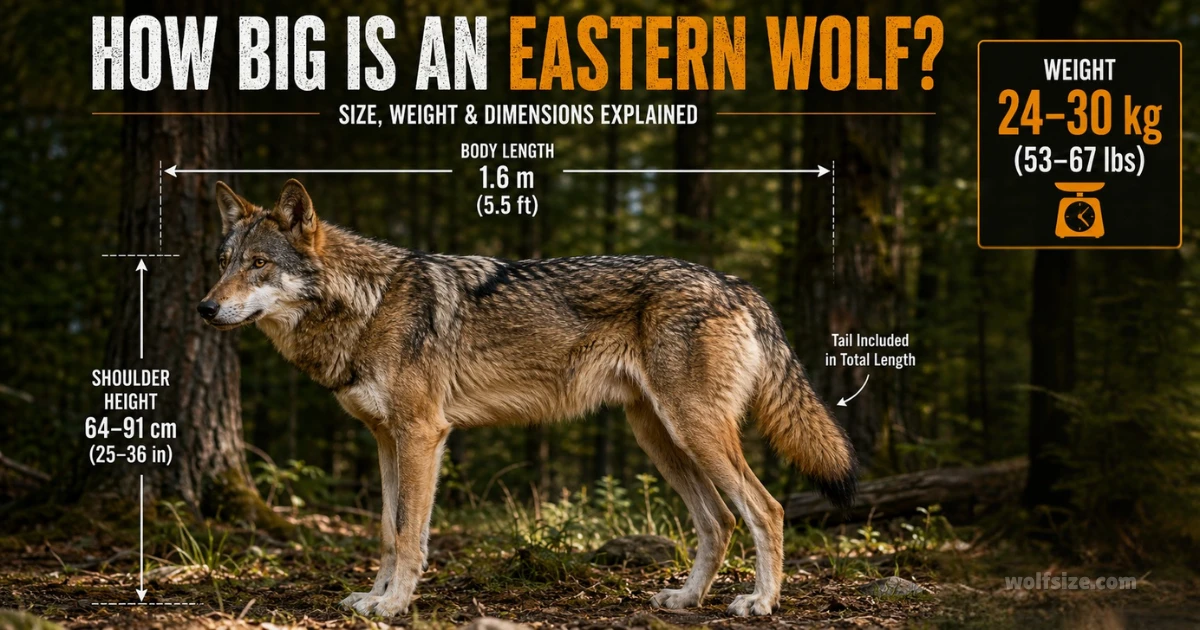
An adult eastern wolf typically weighs between 24–30 kg (53–67 lbs), measures about 1.6 meters (5.5 feet) from nose to tail, and stands 64–91 cm (25–36 inches) tall at the shoulder.
That puts this canid squarely between a coyote and a gray wolf, a size shaped by its genetics, its prey, and its forest habitat across the Great Lakes region and southeastern Canada.
Eastern Wolf Size at a Glance
An average eastern wolf weighs 53 to 67 pounds, stretches 5.5 feet long, and stands 25 to 36 inches at the shoulder. Females average 53 pounds (23.9 kg), while males average 67 pounds (30.3 kg), a clear case of sexual dimorphism.
This wolf’s body is built for endurance, not bulk. It carries a long, bushy tail and a grizzled grayish-brown coat, often mixed with cinnamon along the back and creamy or rufous tones on the flanks and chest.
Lifespan in the wild runs 3 to 4 years on average, though individuals have lived up to 15 years. Pups disperse early too, leaving their birth territory at around 15 weeks old, much sooner than gray wolf pups.
Two recognized forms exist under the eastern wolf umbrella. The Great Lakes wolf (Minnesota, Wisconsin, Michigan’s Upper Peninsula) runs larger and carries roughly 75% gray wolf ancestry.
The Algonquin wolf (central Ontario, southwestern Quebec) is smaller and carries closer to 60% gray wolf ancestry, 40% coyote. This genetic split is the real reason size estimates vary between sources.
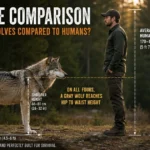
For scale: eastern wolf size lands somewhere between a German Shepherd and a small Great Dane, a useful mental anchor when picturing the actual animal in the field.
Male vs. Female Eastern Wolf Size
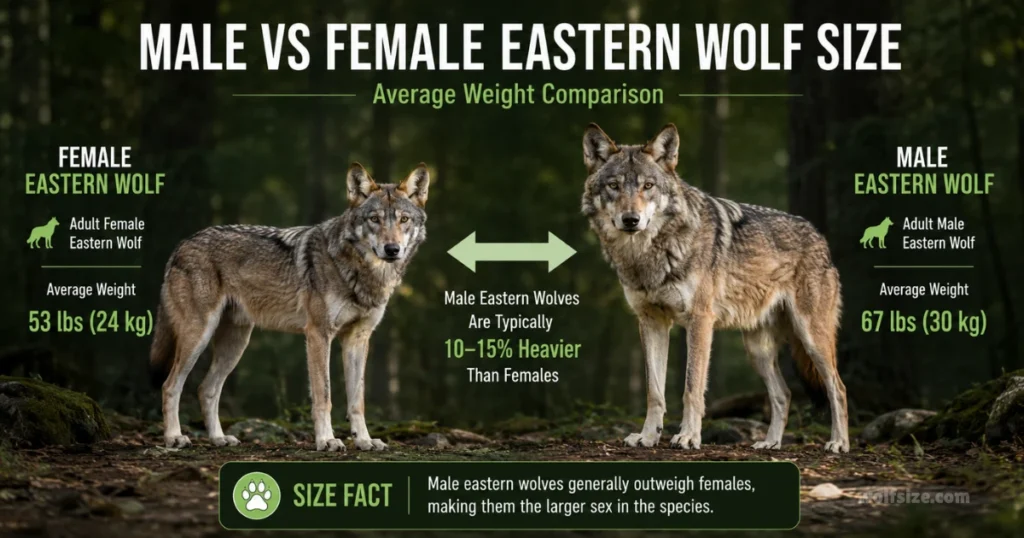
Male eastern wolves outweigh females by roughly 10 to 15%, averaging 67 pounds against the female average of 53 pounds. This pattern, known as sexual dimorphism, shows up consistently across wolf species, though the gap is more pronounced in eastern wolves than in coyotes.
Field researchers use this size gap practically. Heavier males tend to leave deeper, wider tracks in snow and soft ground, which helps trackers estimate sex without a direct sighting.
Eastern Wolf Size Compared to Gray Wolves, Coyotes, and Red Wolves
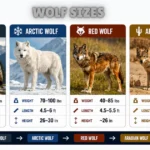
| Canid Species | Typical Weight | Size Comparison | Genetic Background |
|---|---|---|---|
| Gray Wolf | 50–110 lbs | Largest of the group | Primarily gray wolf lineage |
| Eastern Wolf | 53–67 lbs | Medium-sized, between gray wolves and coyotes | Mixed ancestry, leaning toward gray wolf genetics |
| Coyote | 20–35 lbs | Smallest of the group | Primarily coyote lineage |
| Red Wolf | 45–80 lbs | Closest in size to the eastern wolf | Approximately 40% gray wolf ancestry and 60% coyote ancestry |
More Posts:How Big Is a Mexican Wolf? Size, Weight, Height & Facts – 2026
Why Eastern Wolves Stay a Unique Size
Diet, not just genetics, keeps eastern wolves from growing as large as gray wolves. Gray wolves hunt moose, elk, and bison, animals that demand a heavier, more powerful build. Eastern wolves primarily hunt white-tailed deer and beaver, smaller prey that rewards speed and agility over raw size.
This pattern is called a prey-driven body size adaptation, and it’s well documented. The Mexican wolf of the southwestern United States shows the same trend, staying smaller than other gray wolf populations because it also hunts mid-sized prey.
Even with a smaller frame, eastern wolves eat efficiently when food is available, consuming up to 20 kg (44 lb) in a single sitting after a successful hunt. Packs typically number 3 to 6 wolves, built around one breeding pair and their offspring from past litters.
It helps to separate two ideas people often confuse: population size and body size. Eastern wolf numbers collapsed sharply after European settlement due to habitat loss and hunting, with fewer than 500 Algonquin wolves remaining in the wild today. That population crash never changed the physical size of individual wolves, which has stayed consistent generation to generation.
Eastern Wolf Size FAQs
How Big Is an Eastern Wolf Compared to a Gray Wolf?
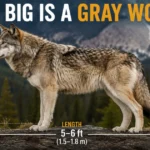
Eastern wolves are smaller than gray wolves. Eastern wolves typically weigh 53 to 67 pounds (24–30 kg), while gray wolves can weigh anywhere from 50 to 110 pounds (23–50 kg).
What Is the Average Weight of an Eastern Wolf?
The average weight of an eastern wolf is about 67 pounds (30 kg) for males and 53 pounds (24 kg) for females.
How Long Is an Eastern Wolf From Nose to Tail?
An adult eastern wolf measures approximately 5.5 feet (1.6 meters) from the tip of the nose to the end of the tail.
Are Eastern Wolves Bigger Than Coyotes?
Yes. Eastern wolves are significantly larger, weighing roughly twice as much as a typical coyote, which usually weighs only 20 to 35 pounds (9–16 kg).
Do Male and Female Eastern Wolves Differ Much in Size?
Yes. Male eastern wolves are generally 10–15% heavier than females, making them noticeably larger on average.
Is the Eastern Wolf the Same Size as a Red Wolf?
Nearly identical. Red wolves typically weigh 45 to 80 pounds (20–36 kg), which overlaps almost completely with the size range of eastern wolves.

Robert Taylor is a content researcher and writer specializing in dimensions, measurements, and size comparison guides. He creates clear, practical content that helps readers understand real-world sizes and measurements with confidence. His work focuses on delivering accurate, easy-to-use dimension information in both U.S. and metric units.