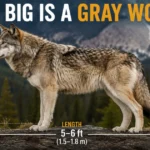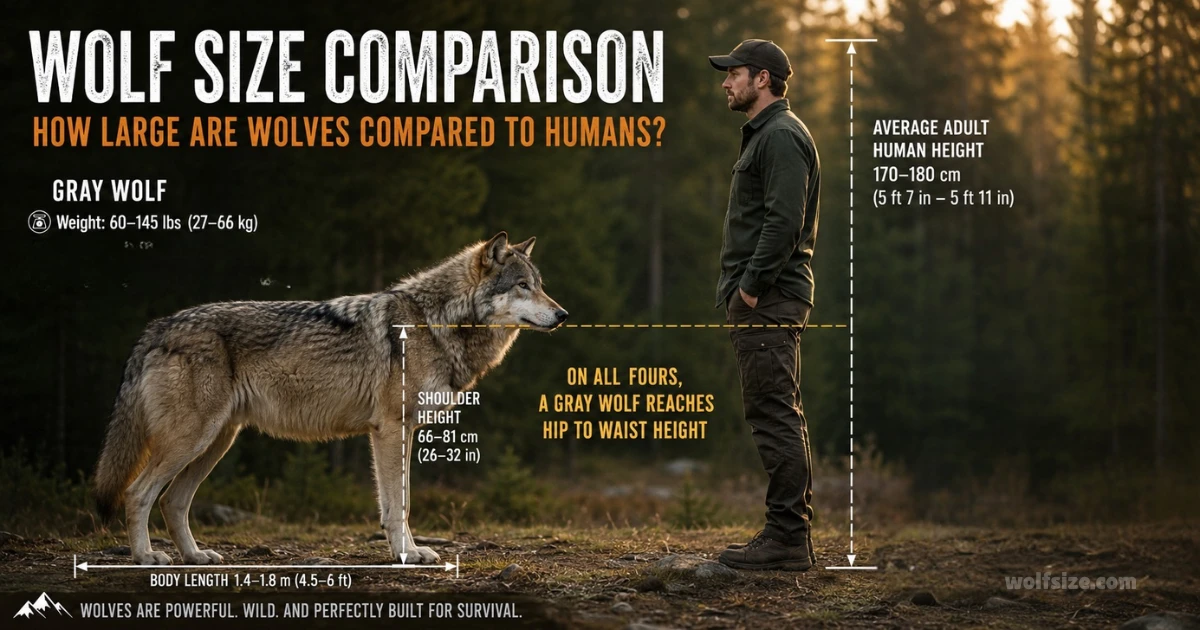
An average gray wolf weighs 60–145 lbs (27–66 kg), stands 26–32 inches (66–81 cm) tall at the shoulder, and measures 4.5–6 feet (1.4–1.8 m) in length.
On all fours, a gray wolf typically reaches hip to waist height on an average adult human.
The truth might surprise you. Wolves are large — but not always as giant as people imagine. Let’s break it down with real numbers and honest comparisons.
Average Wolf Size: Key Stats at a Glance
| Measurement | Average Wolf |
|---|---|
| Weight | 60 – 145 lbs |
| Shoulder Height | 26 – 32 inches |
| Body Length | 4.5 – 6 feet |
| Tail Length | 13 – 20 inches |
Male wolves are consistently larger than females — typically by 20% in body weight.
Wolf Size Compared to a Human: A Side-by-Side Look
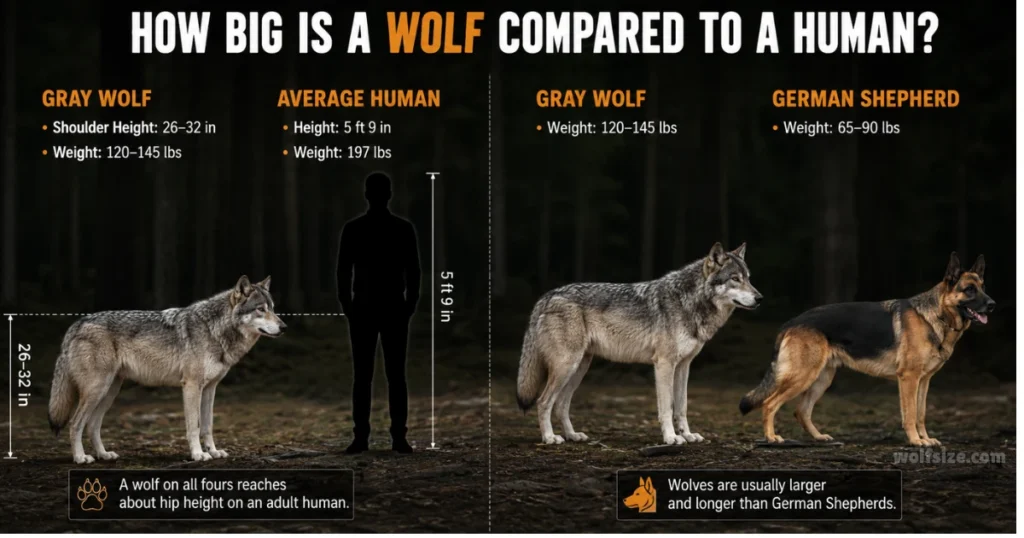
A wolf standing on all fours reaches about hip height on an average adult human. That puts its shoulder at roughly 2.5 feet — about the same level as your waist.
They don’t look threatening at eye level. But the moment a wolf stands up on its hind legs — which they sometimes do — it can reach 5 to 7 feet tall. That puts it face-to-face with most adults.
How Tall Is a Wolf Standing Next to a Person?
An average adult American man stands 5 feet 9 inches tall and weighs around 197 pounds according to the CDC.
A large male gray wolf stands 32 inches at the shoulder and weighs up to 145 pounds.
So on all fours, the wolf’s head comes up to a human’s thigh or hip. It’s big — but not towering. The illusion of massive size comes from thick fur, wide chest, and powerful posture.
Wolf Weight vs. Human Weight: How Do They Stack Up?
| Measurement | Wolf (Large Male) | Average Human Male |
|---|---|---|
| Weight | ~120–145 lbs | ~197 lbs |
| Height | ~32 in (shoulder) | ~69 inches |
| Length | ~5–6 feet | ~5.75 feet |
Wolves are lighter than the average American man. That surprises most people. Their muscular build and dense coat create a visual impression of more mass than they actually carry.
More Posts:How Big Is an Eastern Wolf? Size, Weight, Height & Facts – 2026
Wolf Size Comparison: Wolves vs. Other Animals
Wolf vs. Coyote Size
Coyotes are significantly smaller than wolves. A coyote typically weighs just 20 to 50 pounds — less than half of a mid-sized wolf. Their shoulder height tops out around 21 to 24 inches.
Side by side, a wolf vs. coyote comparison is almost like comparing a German Shepherd to a Beagle. Same family. Very different size.
Wolves have broader snouts, larger feet, and a more muscular frame. Coyotes look lean and almost delicate by comparison.
Wolf vs. German Shepherd
A German Shepherd weighs between 50 to 90 pounds and stands 22 to 26 inches at the shoulder.
A gray wolf outweighs a German Shepherd by 30 to 60 pounds in most cases. Wolves also have longer legs, wider chests, and bigger paws.
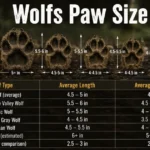
Wolf paws alone can measure 4 inches wide and 5 inches long — nearly double the paw size of a large dog.
Wolf vs. Lion and Bear: How Does a Wolf Compare?
| Animal | Weight | Shoulder Height |
|---|---|---|
| Gray Wolf | 60–145 lbs | 26–32 inches |
| African Lion | 265–420 lbs | 45–50 inches |
| Black Bear | 130–660 lbs | 35–42 inches |
| Grizzly Bear | 400–790 lbs | 42–48 inches |
Wolves are dwarfed by lions and bears. A grizzly bear can outweigh a wolf by more than 600 pounds.
Yet wolves are known to steal kills from grizzlies — which says everything about their intelligence and pack strategy over raw size.
More Posts:Wolf vs German Shepherd Size: Which Animal Is Bigger? 2026
Gray Wolf vs. Other Wolf Species: Who’s the Biggest?
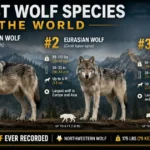
Not all wolves are the same size. Wolf species and subspecies vary dramatically across the globe.
Gray Wolf Size vs. Arctic Wolf
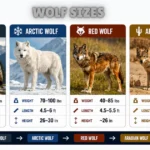
The Arctic wolf (Canis lupus arctos) lives in Canada’s High Arctic and Greenland. It’s slightly smaller than the gray wolf — averaging 75 to 125 pounds — but has a thicker, all-white coat that makes it look bulkier than it is.
Arctic wolves have shorter legs and ears compared to gray wolves — an adaptation to retain body heat in extreme cold.
Gray Wolf Size vs. Red Wolf
The red wolf (Canis rufus) is one of the rarest wolves on Earth. It’s also one of the smallest.
Red wolves weigh just 45 to 80 pounds and stand around 26 inches tall. They’re closer in size to a large coyote than a gray wolf.
As of recent counts, fewer than 20 red wolves remain in the wild in North Carolina — making them critically endangered according to the U.S. Fish & Wildlife Service.
Ethiopian Wolf: The Smallest of Them All
The Ethiopian wolf (Canis simensis) barely resembles what most people picture when they think “wolf.”
It weighs just 24 to 42 pounds — lighter than many domestic dogs. It’s also the world’s most endangered canid, with fewer than 500 individuals surviving in the highlands of Ethiopia according to the IUCN Red List.
What Makes Wolves Look Bigger Than They Actually Are?
Wolves appear larger than they are. It’s not an accident.
Thick Fur and Posture: The Optical Illusion of Wolf Size
A wolf’s winter coat can be 2 to 3 inches thick, adding visible bulk without adding real mass. Their guard hairs stand up when threatened — making them look even larger.
Their wide, deep chest and long legs create a silhouette that reads as massive. Compare that to a coyote’s narrow chest and the difference is striking.
Wolves also deliberately use posture as a dominance signal. An alpha wolf standing tall with ears up and tail raised looks significantly larger than a submissive wolf crouching low — even if they weigh exactly the same.
Wildlife photographers note that wolves often look 30% bigger in photos than in person due to fur depth and camera lens compression.
FAQ’s Wolf Size Comparison
How Large Are Wolves Compared to Humans?
A wolf on all fours reaches about hip to waist height on an average adult. Most gray wolves weigh 60–145 lbs (27–66 kg), which is lighter than the average American man at 197 lbs (89 kg). On their hind legs, a large wolf can stand 5–7 feet (1.5–2.1 m) tall — nearly the same height as a human.
How Much Bigger Is a Wolf Than a Dog?
Wolves are larger than most dog breeds. A gray wolf can outweigh a German Shepherd by 30–60 lbs (14–27 kg) and has longer legs, larger paws, and a broader chest. Only giant breeds such as the Great Pyrenees and Irish Wolfhound come close to matching a wolf’s size.
How Big Was the Largest Wolf Ever?
The largest verified wolf ever recorded weighed 175 pounds (79 kg) and was documented in Alaska. Although some reports claim wolves exceeding 200 lbs (91 kg), these records have not been scientifically confirmed.
Are Wolves Bigger Than Coyotes?
Yes—significantly. Wolves typically weigh 2 to 4 times more than coyotes. While a coyote usually reaches a maximum weight of around 50 lbs (23 kg), a large wolf can exceed 150 lbs (68 kg), making it up to three times heavier.

Robert Taylor is a content researcher and writer specializing in dimensions, measurements, and size comparison guides. He creates clear, practical content that helps readers understand real-world sizes and measurements with confidence. His work focuses on delivering accurate, easy-to-use dimension information in both U.S. and metric units.