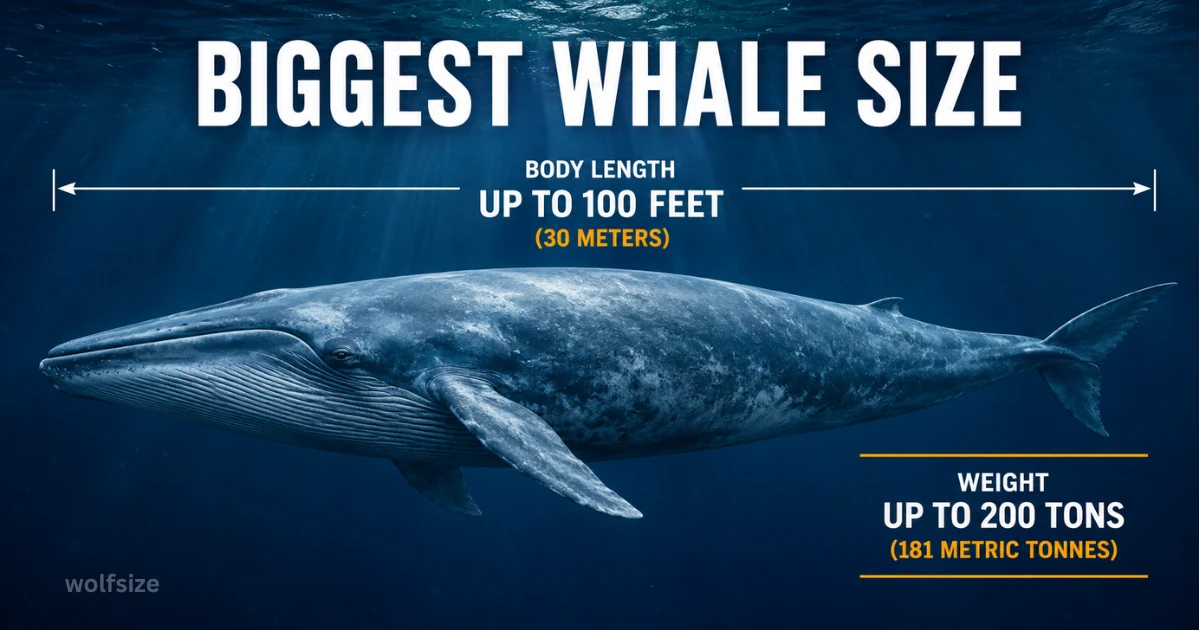
The blue whale is the biggest whale in the world, reaching up to 100 feet (30 meters) long and weighing as much as 200 tons (181 metric tonnes). It is also the largest animal ever known to exist on Earth.
This guide breaks down the biggest whale in the world, the largest one ever recorded, and the top five giants of the ocean. Every whale listed here comes with its real size, weight, and key facts.
What Is the Biggest Whale in the World?
Blue Whale — The Biggest Whale in the World
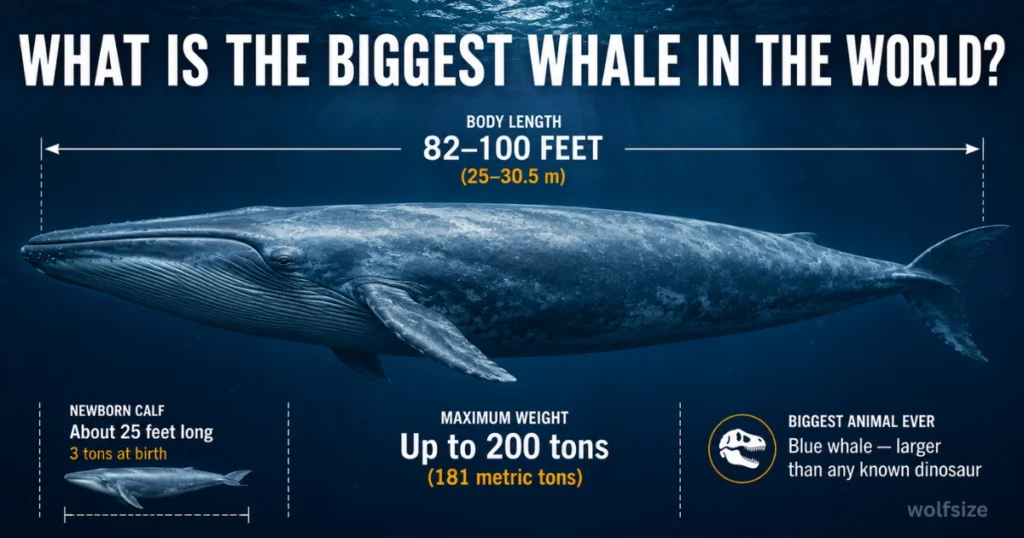
The blue whale (Balaenoptera musculus) holds the title of the biggest whale in the world and the biggest animal to ever exist on Earth. It beats every known dinosaur in both length and mass. A blue whale’s heart alone weighs as much as a small car, and its tongue can weigh as much as an elephant.
Average Size and Weight of the Biggest Whale
A typical blue whale measures between 82 and 100 feet long — close to the length of three school buses parked end to end. It weighs up to 200 tons, roughly equal to 33 elephants. Even a newborn blue whale calf is huge: about 25 feet long and 3 tons at birth, gaining nearly 200 pounds a day on its mother’s milk.
More Posts:Moose Size Comparison: Height, Weight, Elk, Horse & Human
Current Biggest Whale in the World
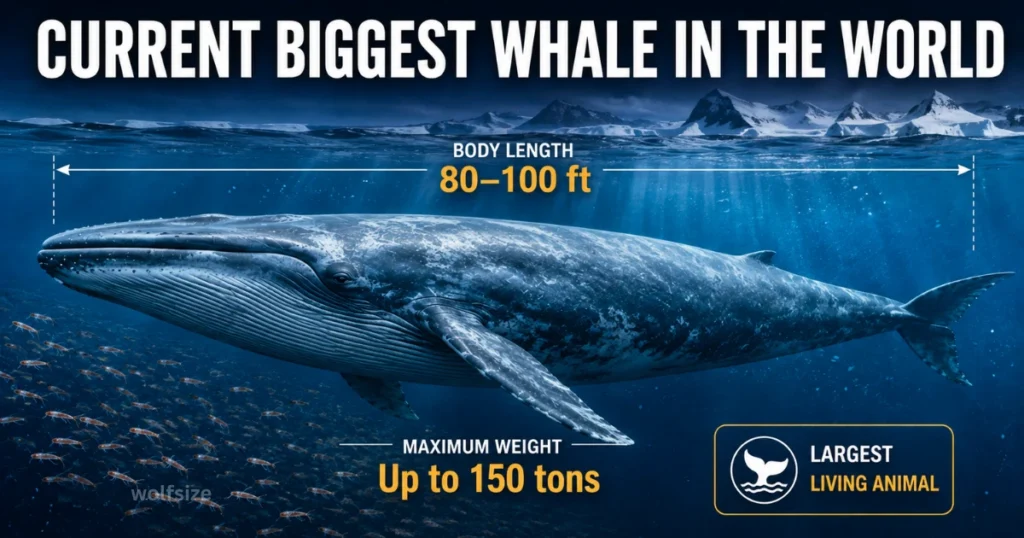
Largest Living Blue Whale on Record Today
Blue whales alive today still reach 80 to 100 feet and up to 150 tons, though sizes this large are rarer now than a century ago. Decades of commercial whaling wiped out most of the largest individuals before modern protections began in 1966. Today’s population is smaller and more scattered, so true record-sized whales are harder to find and confirm.
Where the World’s Biggest Whales Live Now
Blue whales live in every ocean except the Arctic. They spend summers feeding in cold polar waters, then migrate toward the equator in winter to breed. Most sightings today happen off the coasts of California, Sri Lanka, and Antarctica, where krill — their only food source — is most abundant.
Biggest Whale Ever Recorded
Heaviest Whale Ever Recorded
The heaviest blue whale ever documented was a female caught by whalers in Antarctic waters in 1947. She weighed 418,878 pounds — about 190 tons, or the equivalent of 2,500 average adult humans. This remains the heaviest animal weight ever confirmed for any species.
Longest Whale Ever Recorded
The longest blue whale on record was also a female, killed in the South Atlantic Ocean in 1909. She measured just over 110 feet long. That’s longer than a Boeing 737 aircraft, and it stands as the longest confirmed length for any animal in history.
More Posts:Blue Whale Size Comparison: Human, Elephant, Dinosaur & More
5 Top Biggest Whales in the World
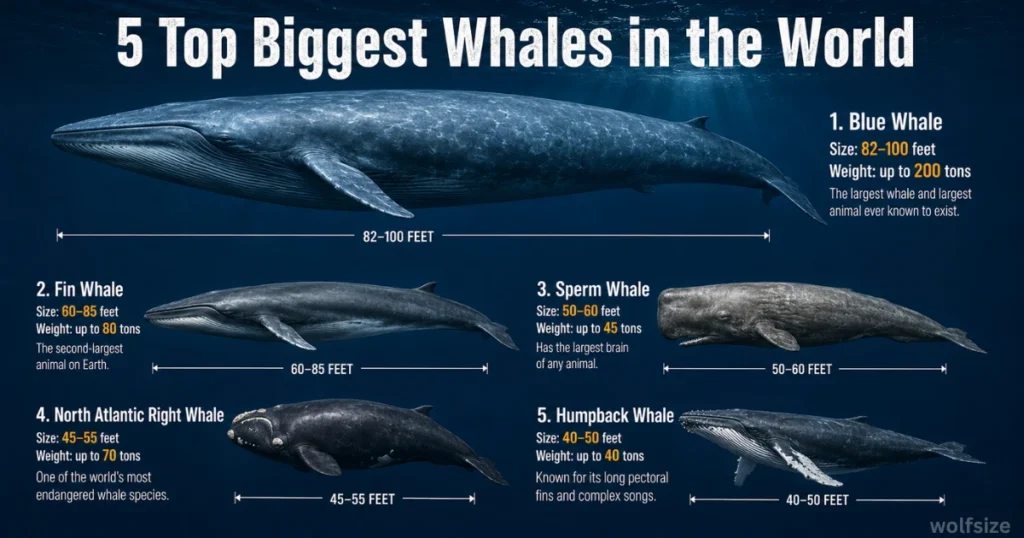
Blue Whale
Size: 82–100 feet. Weight: up to 200 tons. The undisputed biggest whale in the world, and the biggest animal ever known to exist.
Fin Whale
Size: 60–85 feet. Weight: up to 80 tons. Known as the “greyhound of the sea” for its speed, the fin whale is the second-largest animal on Earth and can occasionally interbreed with blue whales.
Sperm Whale
Size: 50–60 feet. Weight: up to 45 tons. The sperm whale has the largest brain of any animal on Earth and can dive over 7,000 feet deep to hunt giant squid.
North Atlantic Right Whale
Size: 45–55 feet. Weight: up to 70 tons. This whale is one of the most endangered whale species in the world, with fewer than 400 individuals left.
Humpback Whale
Size: 40–50 feet. Weight: up to 40 tons. Famous for its long pectoral fins and complex songs, the humpback whale is one of the most recognized whale species in the world.
More Posts:Tiger Size vs Lion: Weight, Height, Length & Size Comparison
Why the Blue Whale Is the Biggest Whale in the World
How Ocean Water Supports Their Massive Size
Water buoyancy is the real secret behind the biggest whale in the world. The ocean supports a blue whale’s full body weight, so its skeleton doesn’t need to fight gravity the way a land animal’s does. If a blue whale were placed on land, its own weight would collapse its organs. This is why no land mammal has ever come close to this size.
What the Biggest Whale in the World Eats Each Day
Blue whales are filter feeders, not predators in the traditional sense. They use baleen plates — fringed, comb-like structures made of keratin — to strain tiny shrimp-like animals called krill from seawater. A single adult blue whale eats between 4 and 8 tons of krill per day, sometimes taking in over 450,000 calories in one mouthful.
Are Blue Whales Still Growing Bigger?
Fossil evidence shows blue whale ancestors were far smaller millions of years ago. Around 5.3 million years ago, cooling oceans triggered massive krill blooms, and whale bodies grew larger to take advantage of the extra food. This growth trend continued for millions of years — but climate change and warming, more acidic oceans are now shrinking krill populations, which could reverse that trend.
FAQs About the Biggest Whale in the World
What Is the Biggest Whale in the World?
The blue whale is the biggest whale in the world, reaching up to 100 feet long and weighing around 200 tons.
How Big Is the Biggest Whale Ever Recorded?
The heaviest recorded blue whale weighed about 418,878 pounds, while the longest measured just over 110 feet.
Is the Blue Whale Bigger Than a Dinosaur?
Yes. The blue whale is larger than any known dinosaur, including the massive Argentinosaurus.
What Does the Biggest Whale in the World Eat?
Blue whales feed almost entirely on krill, consuming up to 8 tons of krill per day during feeding season.
Are Blue Whales Endangered?
Yes. Blue whales are classified as endangered, mainly because of historical commercial whaling and continuing threats from human activities in the oceans.

Robert Taylor is a content researcher and writer specializing in dimensions, measurements, and size comparison guides. He creates clear, practical content that helps readers understand real-world sizes and measurements with confidence. His work focuses on delivering accurate, easy-to-use dimension information in both U.S. and metric units.