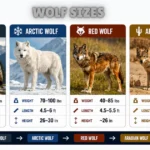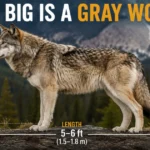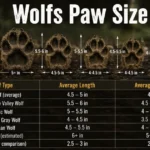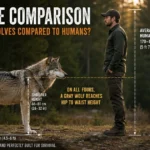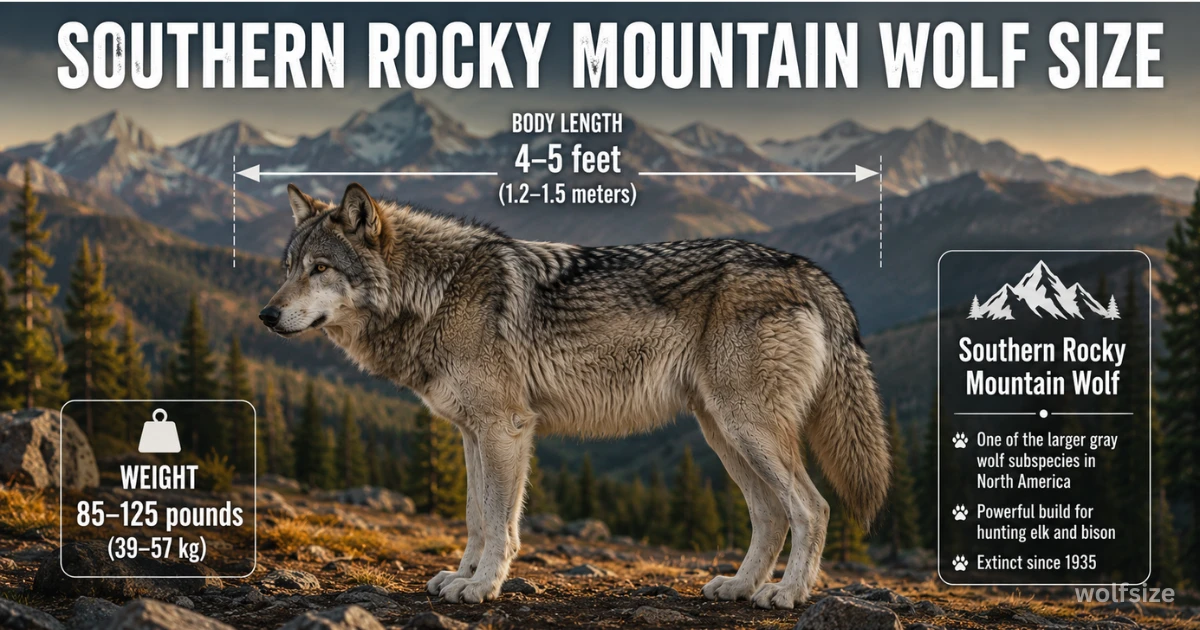
The Southern Rocky Mountain wolf was one of the larger gray wolf subspecies in North America, typically weighing 85–125 pounds (39–57 kg) and measuring about 4–5 feet (1.2–1.5 meters) in length. Its large, powerful build helped it hunt big prey such as elk and bison throughout the Rocky Mountain region before the subspecies became extinct in 1935.
This wolf no longer exists. But its size, bone structure, and hunting build still tell us a lot about how wolves adapt to harsh, high-altitude terrain.
Southern Rocky Mountain Wolf Size at a Glance
Average Length and Height
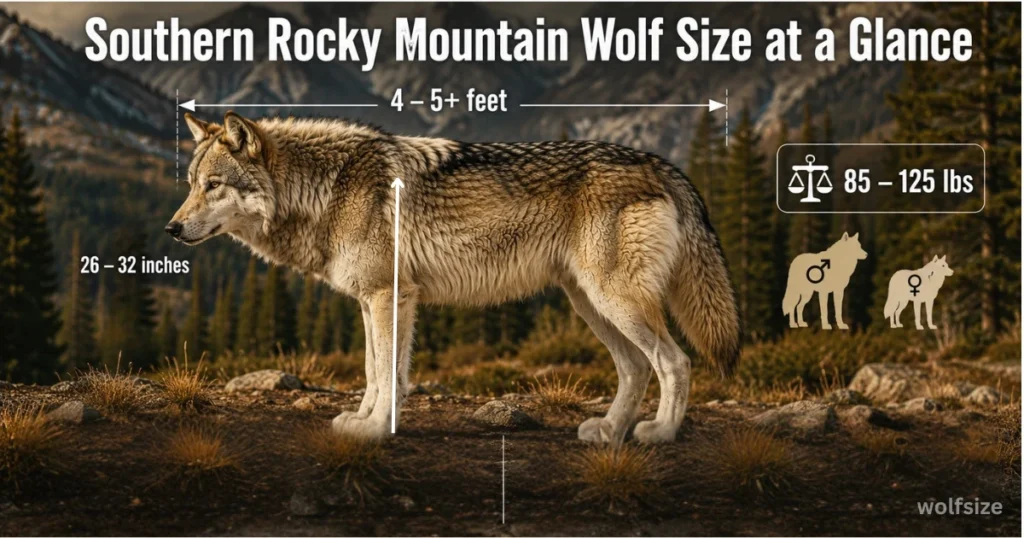
Historical records put this wolf at 4 to just over 5 feet long, measured from nose to tail tip. That’s noticeably longer than a typical modern gray wolf. Shoulder height likely sat between 26 and 32 inches, similar to its close cousin, the Northern Rocky Mountain wolf.
Average Weight (Males vs. Females)
Weight estimates run from 85 to 125 pounds. Males typically sat at the higher end of that range, while females stayed lighter and leaner — a size gap common across almost all gray wolf subspecies due to sexual dimorphism.
Quick-Fact Summary Table
| Measurement | Range |
|---|---|
| Length (Nose to Tail) | 4 – 5+ feet |
| Weight | 85 – 125 lbs |
| Shoulder Height | 26 – 32 inches |
| Coat Color | Light, buff-colored with blackish-buff back hairs |
| Status | Extinct since 1935 |
Southern Rocky Mountain Wolf Size Compared to Other Wolves
Southern Rocky Mountain Wolf vs. Northern Rocky Mountain Wolf Size
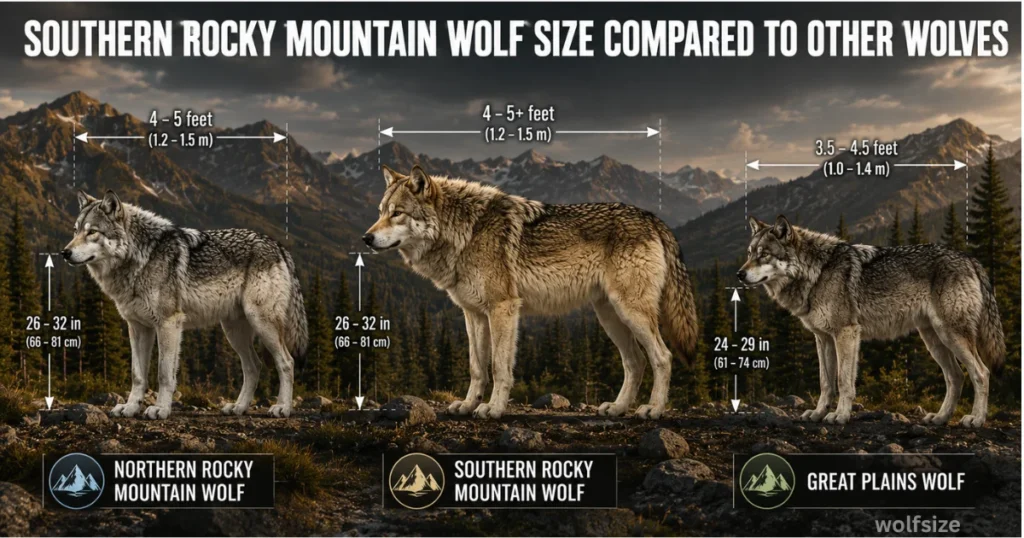
These two wolves were close in build. The Northern Rocky Mountain wolf ran slightly heavier on average, but the Southern population matched it in length and frame. Both were considered among the largest gray wolf subspecies in the American West.
Southern Rocky Mountain Wolf vs. Modern Gray Wolf Size
Today’s gray wolves in the Rockies, mostly reintroduced Canis lupus occidentalis, tend to run smaller in overall frame length, though weight ranges overlap. The extinct Southern population carried a longer body built for chasing large prey across open ground.
Southern Rocky Mountain Wolf vs. Great Plains Wolf Size
Researchers have long noted this wolf closely resembled the Great Plains wolf in coat color and body type — but grew noticeably larger. Think of the Southern Rocky Mountain wolf as a bigger, mountain-adapted version of that Plains cousin.
Why Southern Rocky Mountain Wolf Size Estimates Vary
Limited Historical Specimen Data
This subspecies went extinct nearly a century ago. Scientists working today rely on preserved skins, skulls, and field notes collected between the 1850s and 1915 — not live measurements. That naturally creates gaps and rounding differences.
Differences Between Early 20th-Century Records
The wolf was formally described in 1937 by biologist Edward Alphonso Goldman, working from specimens gathered years earlier. Measuring standards weren’t always consistent across different collectors and expeditions, which explains the spread between 4-foot and 5-plus-foot length estimates.
Male-Female Size Variation
Some of the “conflicting” numbers aren’t errors at all — they simply reflect the natural size difference between male and female wolves. A large male skewing the top of the range can make average figures look inconsistent if the sample size was small.
More Posts:Vancouver Island Wolf Size: Complete Weight, Height, and Length Guide
What Shaped the Southern Rocky Mountain Wolf’s Size
Diet and Prey Size (Bison, Elk, Deer)
This wolf hunted bison, elk, deer, pronghorn, and even javelina. Taking down animals that large requires a bigger, more powerful frame — heavier jaw muscles, longer legs, and greater overall mass than a wolf that mainly hunts rabbits or rodents.
Climate and Rocky Mountain Habitat
Cold, high-elevation environments tend to favor larger-bodied animals. This follows a well-documented ecological pattern: bigger bodies retain heat more efficiently in harsh mountain winters, giving larger wolves a survival edge across the Rockies.
Evolutionary Ties to the Great Plains Wolf
Genetic research on preserved mitochondrial DNA has linked this wolf, the Great Plains wolf, and the Mexican wolf into what scientists call a “southern clade” — a distinct genetic lineage found only in North America. That shared ancestry likely explains why body size and coat traits overlapped so closely between these related subspecies.
Southern Rocky Mountain Wolf Size FAQ’s
How big was the Southern Rocky Mountain wolf?
It measured roughly 4 to 5+ feet long and weighed 85 to 125 pounds, making it one of the larger gray wolf subspecies in North America.
Was the Southern Rocky Mountain wolf bigger than a modern gray wolf?
Yes, in most cases. Its body length and weight typically exceeded today’s average gray wolf, especially reintroduced populations in the Rockies.
How much did a Southern Rocky Mountain wolf weigh?
Weight ranged from about 85 pounds on the low end to 125 pounds for larger males.
How long was a Southern Rocky Mountain wolf from nose to tail?
Length ranged from 4 feet to just over 5 feet, depending on the individual and available records.
Is the Southern Rocky Mountain wolf the largest extinct wolf subspecies?
Not the largest overall, but it ranks among the largest gray wolf subspecies to have lived in the western United States.
More Posts:Greenland Wolf Size: How Big Is This Rare Arctic Predator?
Conclusion
The Southern Rocky Mountain wolf’s size — long-bodied, heavy-boned, and built for big-game hunting — made it one of the most formidable predators in the Rocky Mountain region before it disappeared in 1935. Its size wasn’t an accident; it was shaped directly by cold mountain climates and a diet built around large prey like bison and elk.

Robert Taylor is a content researcher and writer specializing in dimensions, measurements, and size comparison guides. He creates clear, practical content that helps readers understand real-world sizes and measurements with confidence. His work focuses on delivering accurate, easy-to-use dimension information in both U.S. and metric units.